
Table of Contents
Office Building Lift Inspection Madhapur | CEIG & IS 17900 Audits
Madhapur stands as the vibrant corporate engine and commercial nerve center of Hyderabad. Anchored by global tech parks, corporate headquarters, co-working centers, and commercial real estate hubs lining Kavuri Hills, Mindspace Cyberabad, Durgam Cheruvu Metro Corridor, HITEC City Main Road, and Knowledge City, Madhapur experiences intense vertical transit activity.
In these multi-tier corporate towers, high-speed passenger elevators, service lifts, and glass capsule elevators are the primary arteries of daily business operations. Transporting thousands of IT professionals, corporate executives, clients, and maintenance crews during peak morning rushes, lunch hours, and evening departure windows, commercial elevators operate under demanding conditions. Lifts in Madhapur complete hundreds of start-stop cycles per hour, placing tremendous stress on mechanical braking systems, traction gearboxes, Variable Voltage Variable Frequency (VVVF) inverter drives, and door operators.
┌─────────────────────────────────────────────────────────────────────────────┐
│                 MADHAPUR OFFICE LIFT OPERATIONAL MANDATE                    │
├──────────────────────────────────────┬──────────────────────────────────────┤
│      UNINSPECTED OFFICE LIFT RISKS   │    CERTIFIED INSPECTION ADVANTAGES   │
├──────────────────────────────────────┼──────────────────────────────────────┤
│ • Sudden Peak-Hour Elevator Stoppage │ • Uninterrupted Commercial Transit   │
│ • Dangerous Floor Misleveling Drops  │ • Precision Leveling Calibration     │
│ • Lapsed CEIG Operational Licenses   │ • 100% Telangana Lift Act Clearance  │
│ • Bypassed Door Interlocks by Vendor │ • Independent Safety Circuit Verification│
│ • Depleted ARD Battery Evacuation    │ • Verified Emergency Grid Fail-Safe  │
│ • Rejected Corporate Asset Insurance │ • Fully Validated Insurance Claims   │
└──────────────────────────────────────┴──────────────────────────────────────┘
Conducting a professional office building lift inspection in Madhapur is a critical operational requirement for facility directors, commercial property developers, asset managers, and corporate real estate heads. By subjecting commercial vertical transportation systems to rigorous physical, mechanical, electrical, and structural safety audits aligned with the Telangana Lifts Act, Chief Electrical Inspectorate to Government (CEIG) directives, National Building Code (NBC 2016), and Bureau of Indian Standards (IS 14665 / IS 17900:2022), property managers ensure occupant safety, regulatory compliance, and smooth business continuity.
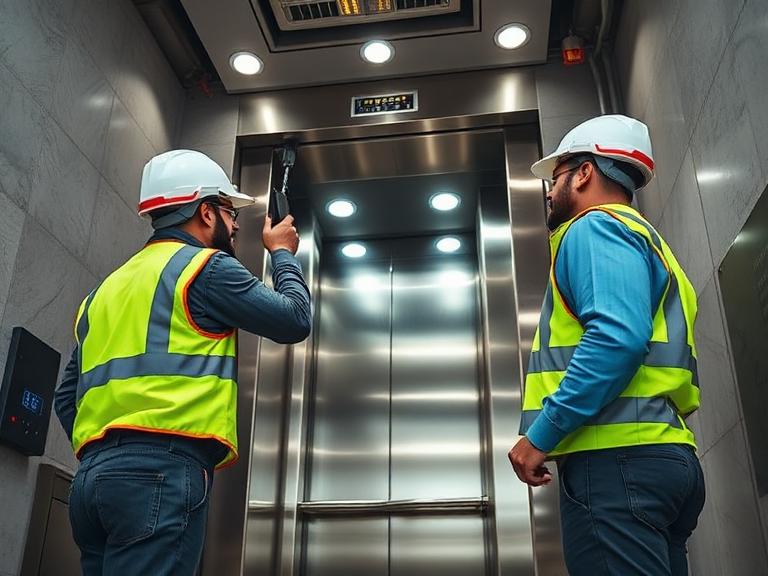
1. The Critical Role of Elevator Safety Inspections in Madhapur Commercial Real Estate
In high-density office towers across Madhapur, vertical mobility directly dictates tenant satisfaction, property valuation, and workplace productivity. An unexpected elevator breakdown during morning peak arrival hours causes lobby overcrowding, missed meetings, and severe employee frustration. Worse, a mechanical safety failure—such as a door opening between floors, an overspeed drop, or un-leveling—exposes building management to severe legal liabilities, financial damages, and brand reputation loss.
┌─────────────────────────────────────────────────────────────────────────┐
│               ROUTINE AMC MAINTENANCE VS. THIRD-PARTY INSPECTION        │
├───────────────────────────────┬─────────────────────────────────────────┤
│ ROUTINE AMC MAINTENANCE       │ THIRD-PARTY COMMERCIAL LIFT INSPECTION  │
├───────────────────────────────┼─────────────────────────────────────────┤
│ • Performed by AMC Vendor     │ • Performed by Independent Safety Auditor│
│ • Focuses on lubrication/clean│ • Focuses on statutory code compliance  │
│ • Basic visual checks         │ • Quantitative NDT & dynamic stress test│
│ • Inherent vendor conflict    │ • Zero vendor conflict of interest      │
│ • Fills internal service logs │ • Issues legal audit & clearance report │
└───────────────────────────────┴─────────────────────────────────────────┘
While most commercial office towers maintain Annual Maintenance Contracts (AMCs) with elevator manufacturers or local service agencies, routine AMC maintenance is not a safety inspection. AMC technicians focus on cleaning, lubricating, and fixing reported operational defects. However, third-party safety auditors independently evaluate fail-safe devices without any commercial bias. Third-party engineers rigorously test mechanical overspeed governors, verify brake holding torque, inspect high-voltage electrical panels, measure wire rope wear, and audit Automatic Rescue Device (ARD) battery response under simulated power failures.
Primary Strategic Objectives of Office Lift Audits
- Uncovering Latent Mechanical Wear: Identifying microscopic rope fatigue, worn brake pad linings, or degraded guide shoe liners before they cause sudden elevator failure.
- Eliminating AMC Vendor Short-Cuts: Detecting whether AMC service technicians have bypassed safety circuits using temporary electrical jumper wires to keep a malfunctioning lift running.
- Guaranteeing CEIG Legal Compliance: Verifying that the building holds a valid Form-B Operational License issued by the Telangana Chief Electrical Inspectorate to Government.
- Protecting Property Owners from Civil & Criminal Liability: Establishing an official engineering audit trail proving that building management took every reasonable precaution to protect corporate occupants.
2. Telangana Lift Act & CEIG Regulatory Framework
Commercial vertical transit in Madhapur operates under strict statutory laws enforced by the Chief Electrical Inspectorate to Government (CEIG) under the Telangana Lifts, Escalators, and Passenger Conveyors Act and Rules.
                 TELANGANA CEIG STATUTORY PERMIT WORKFLOW
                                       │
       ┌───────────────────────────────┼───────────────────────────────┐
       ▼                               ▼                               ▼
FORM-A PERMISSION TO ERECT     FORM-B OPERATIONAL LICENSE      ANNUAL RENEWAL & AUDIT
──────────────────────────     ──────────────────────────      ──────────────────────
Blueprint approval, civil      Granted following physical site Annual / quarterly safety
shaft stability clearance, and inspection, load testing, and   audit logs required to maintain
electrical layout sanction.    governor trip verification.     valid legal operational status.
Essential Legal Compliance Mandates in Cyberabad
- Form-A Erection Permission: Required prior to installing any commercial elevator. Verifies structural shaft dimensions, pit depth, overhead clearances, and machine room electrical layouts.
- Form-B License to Run: Granted following successful physical field inspection, full load testing, and safety device verification by CEIG inspectors.
- Mandatory Periodic Renewal Inspections: Telangana statutes mandate periodic physical safety audits to ensure that fail-safe devices remain fully functional throughout their operational life.
- Building Owner Liability: Under state legislation, primary legal responsibility for accidents resulting from expired licenses or neglected maintenance rests squarely with the property owner or facility management company.
- Commercial Property Insurance Requirements: Commercial real estate insurance policies across Hyderabad explicitly state that claims arising from elevator accidents will be rejected if the elevator was operating with an expired CEIG license.
- GHMC Occupancy Certificate Linkage: The Greater Hyderabad Municipal Corporation (GHMC) links commercial building Occupancy Certificate (OC) renewals directly to active elevator safety licenses.
3. Indian Elevator Safety Codes: IS 14665 & IS 17900:2022
Professional office lift inspection services evaluate high-speed commercial elevators against updated Bureau of Indian Standards (BIS) specifications:
┌─────────────────────────────────────────────────────────────────────────┐
│                    INDIAN ELEVATOR SAFETY STANDARDS                     │
├───────────────────────────────────┬─────────────────────────────────────┤
│ IS 14665 (TRACTION LIFT CODE)     │ IS 17900:2022 (UPDATED SAFETY RULES)│
├───────────────────────────────────┼─────────────────────────────────────┤
│ • Mechanical Overspeed Governors  │ • Unintended Car Movement (UCMP)    │
│ • Electromechanical Main Brakes   │ • Enhanced Pendulum Door Impact Test│
│ • Full-Height Door Light Curtains │ • Fire Classification of Materials  │
│ • Automatic Rescue Device (ARD)   │ • Expanded Pit & Car-Top Refuge Space│
│ • Overload Sensing & Interlocks   │ • Enhanced Shaft & Pit Illumination │
└───────────────────────────────────┴─────────────────────────────────────┘
Critical Safety Mandates for Madhapur IT Towers
- Unintended Car Movement Protection (UCMP): Commercial elevators must feature dual-circuit fail-safe mechanisms that automatically detect and stop unauthorized movement of the elevator car away from a floor landing when landing doors are unlocked, preventing passenger crushing or shearing accidents.
- Pendulum Door Impact Resistance: Landing and car doors in high-traffic commercial buildings must pass structural pendulum tests to withstand high physical impacts without dislodging from their tracks.
- Destination Control System (DCS) Integration Safety: High-speed elevators utilizing DCS technology to cluster passengers must feature fail-safe override systems that immediately revert to basic collective-selective operation during fire emergencies or power grid cuts.
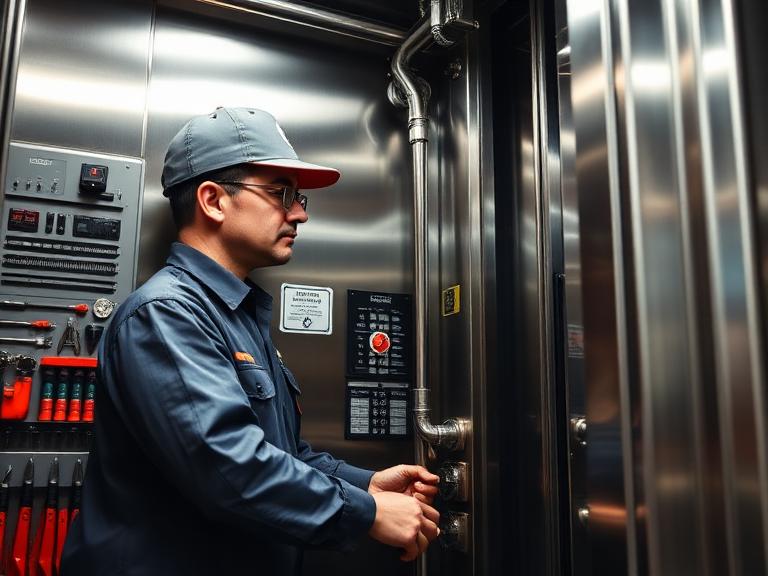
4. Comprehensive 10-Zone Office Building Lift Inspection Checklist
A complete third-party office building lift safety check in Madhapur evaluates ten distinct engineering zones:
                              10-ZONE INSPECTION ARCHITECTURE
                                             │
    ┌───────────────┬───────────────┬────────┴──────┬───────────────┬───────────────┐
    ▼               ▼               ▼               ▼               ▼               ▼
MACHINE ROOM    CAR TOP & ROOF   HOISTWAY PIT   LANDING DOORS   CABIN INTERIOR  EMERGENCY ARD
────────────    ──────────────   ────────────   ─────────────   ──────────────  ─────────────
• Drive Motor   • Top Stop Box   • Buffers      • Interlocks    • Light Curtain • Battery Bank
• Main Brakes   • OSG Trigger    • Tension Wheel• Mechanical     • COP Displays  • Auto-Leveling
• Control Panel • Inspection Mode• Pit Lighting  Landing Locks  • Intercom Call  Grid Simulation
Zone 1: Machine Room / Gearless Motor Assembly
- Electromechanical Main Brakes: Measure brake lining thickness, plunger air gap clearance, and verify dual-coil electrical independence. Conduct dynamic brake hold tests at $125\%$ payload.
- Traction Sheave & Machine Frame: Inspect sheave grooves for uneven wear or metal slivers. Check gearless motor bearing insulation and shaft runout.
- Mechanical Overspeed Governor (OSG): Verify governor rope tension, flyweight movement, and conduct physical trip speed testing.
- Microprocessor Control Panel: Inspect contactors for arc pitting, test grounding continuity, verify fusing ratings, and check terminal tightness.
Zone 2: Elevator Car Top & Hoistway Shaft
- Car-Top Inspection Control Box: Verify functionality of the Emergency Stop switch, Inspection/Normal selector, and Up/Down movement buttons.
- Progressive Safety Gear Linkage: Test the mechanical rod assembly connecting the governor rope to the car safety jaws.
- Door Operator Mechanism: Check belt tension, motor wear, and door clutch engagement.
- Guide Rails & Lubrication: Inspect guide rail alignment, bracket anchor tightness, and auto-oiler functioning.
Zone 3: Hoistway Pit & Buffer Systems
- Oil & Spring Buffers: Verify oil levels in hydraulic buffers and check return switches. Ensure spring buffers are free of deep rust.
- Pit Stop Switch & Illumination: Confirm accessibility of the pit emergency stop button and verify minimum 100 Lux illumination.
- Water Seepage & Hygiene Check: Inspect for monsoon water seepage, oil pooling, or trash accumulation.
┌─────────────────────────────────────────────────────────────────────────┐
│                    HOISTWAY PIT SAFETY REQUIREMENTS                     │
├─────────────────────────────────────────────────────────────────────────┤
│ ✔ Minimum 100 Lux Permanent Pit Lighting Installed                   │
│ ✔ Dual Emergency Pit Stop Switches Fully Operational                   │
│ ✔ Hydraulic / Spring Buffers Inspected & Free of Leakage             │
│ ✔ Tension Pulley Safety Switch Trips Perfectly                         │
│ ✔ Pit Free of Standing Water, Oil, and Trash Debris                    │
└─────────────────────────────────────────────────────────────────────────┘
Zone 4: Landing Entrances & Door Safety Interlocks
- Electromechanical Door Interlocks: Ensure car cannot move if any landing door is unlatched by even $2\text{ mm}$.
- Infrared Light Curtains: Verify full-height multi-beam infrared light curtain array across the door entrance instantly reverses doors upon obstruction.
Zone 5: Cabin Interior & Operating Panels
- Floor Leveling Accuracy: Measure stopping precision at every floor landing under empty, half, and full load conditions (target: $\pm 2\text{ mm}$).
- Overload Protection System: Calibrate overload sensor; verify that car parks with doors open and alarm sounds when capacity is exceeded.
- Emergency Alarm & Intercom: Test two-way communication between cabin interior, security desk, and machine room.
Zone 6: Automatic Rescue Device (ARD) System
- Grid Cut Simulation: Disconnect primary 3-phase power during car travel to test automatic rescue response.
- Battery Bank Load Test: Measure voltage drop under load across all ARD batteries to confirm sufficient power reserve.
                         AUTOMATIC RESCUE DEVICE (ARD) AUDIT
                                          │
       ┌──────────────────────────────────┼──────────────────────────────────┐
       ▼                                  ▼                                  ▼
GRID CUT SIMULATION               BATTERY LOAD TEST               SMOOTH FLOOR LEVELING
───────────────────               ─────────────────               ─────────────────────
Cut primary power during          Measure individual battery      Car moves to nearest floor,
travel to trigger ARD.            voltage under load.             opens doors, and safely
                                                                  evacuates passengers.
Zone 7: Steel Suspension Ropes / Polyurethane Belts
- Wire Rope Inspection: Perform visual and Non-Destructive Testing (NDT) checks for wire breakage, crown wear, rust, or diameter reduction ($>6\%$).
- Equal Rope Tensioning: Measure individual rope tensions using a digital gauge to ensure uniform load distribution.
- Counterweight Locking: Confirm counterweight blocks are locked with tie-rods and retainer plates.
Zone 8: Emergency Communication & Fire Safety
- Fireman’s Emergency Switch: Confirm that activating the fireman key grounds the elevator directly to the primary floor landing and disables normal hall calls.
- Cabin Fire Rating: Confirm interior paneling meets flame-spread rating limits.
Zone 9: Unintended Car Movement Protection (UCMP)
- UCMP Actuation Test: Simulate car drift away from floor landing with doors unlocked to verify secondary brake trigger engagement.
Zone 10: Structural Bedplate & Machine Room Environment
- Machine Room Ventilation & Lighting: Verify ambient temperature controls ($<40^\circ\text{C}$) and adequate lighting for maintenance engineers.
5. Non-Destructive Testing (NDT) & Diagnostic Technologies
Modern third-party commercial lift safety checks utilize advanced diagnostic equipment to assess component integrity objectively:
┌─────────────────────────────────────────────────────────────────────────┐
│               ADVANCED DIAGNOSTIC EQUIPMENT USED IN AUDITS              │
├───────────────────────────────┬─────────────────────────────────────────┤
│ DIAGNOSTIC TOOL               │ PURPOSE & MEASUREMENT TARGET            │
├───────────────────────────────┼─────────────────────────────────────────┤
│ Electromagnetic Rope Tester   │ Detects internal wire rope breaks & core│
│ Digital Tachometer            │ Measures contract speed, governor trip  │
│ ISO 18738 Accelerometer       │ Quantifies 3-axis vibration & jerk rates│
│ Thermal Infrared Camera       │ Scans control panels for hot contacts   │
│ Insulation Resistance Tester  │ Measures motor winding insulation (>5MΩ)│
│ Digital Rope Tension Meter    │ Verifies equal tension across traction  │
└───────────────────────────────┴─────────────────────────────────────────┘
- Electromagnetic Wire Rope Testing (NDT): Detects internal strand breaks, core corrosion, and cross-sectional area loss without damaging the rope.
- Thermal Infrared Imaging: Scans control panels, contactors, VFD inverter terminals, and motor windings to detect loose contacts and electrical overheating risks.
- ISO 18738 Ride Quality Analysis: Measures 3-axis acceleration curves ($Z, Y, X$), acoustic noise levels ($dB$), and jerk rates during acceleration and deceleration.
6. Step-by-Step Commercial Lift Inspection Workflow
A comprehensive third-party office building lift safety check follows an established technical sequence:
┌───────────────────────────────────────────────────────────────────────────┐
│                    INSPECTION EXECUTION TIMELINE                          │
├───────────────────────────────────────────────────────────────────────────┤
│ STEP 1: Pre-Audit Technical Documentation & Logbook Review (Days 1–2)     │
│ STEP 2: Machine Room Physical, Electrical & Thermal Inspection (Day 3)    │
│ STEP 3: Car-Top & Hoistway Shaft Mechanical Safety Testing (Day 3)        │
│ STEP 4: Hoistway Pit, Buffer & Counterweight Structural Check (Day 3)     │
│ STEP 5: Dynamic Load Testing, Speed Governor Trip & ARD Simulations (Day 3)│
│ STEP 6: Risk-Prioritized Diagnostic Report & CEIG Action Plan (Days 4–5)  │
└───────────────────────────────────────────────────────────────────────────┘
Phase 1: Pre-Audit Technical Review
Auditors review technical drawings, previous CEIG licenses, AMC service logs, breakdown history, and component replacement records.
Phase 2: Static Physical & Electrical Inspection
Auditors systematically inspect the machine room, control panel wiring, car-top, hoistway walls, landing door interlocks, and hoistway pit.
Phase 3: Dynamic Safety & Load Testing
Engineers conduct dynamic tests:
- Overspeed Governor Trip Test: Manually trigger governor mechanism at contract speed to confirm mechanical safety jaws lock onto guide rails.
- 125% Rated Load Brake Hold Test: Load elevator car with test weights to verify mechanical brake holding capability.
- ARD Power Cut Simulation: Disconnect main power grid during car movement to confirm complete automated rescue evacuation.
Phase 4: Diagnostic Reporting & Risk Prioritization
Within 48 to 72 hours, auditors deliver a comprehensive report categorizing findings into three risk levels:
                     AUDIT RISK CATEGORIZATION MATRIX
                                     │
    ┌────────────────────────────────┼────────────────────────────────┐
    ▼                                ▼                                ▼
CATEGORY A: CRITICAL RISK      CATEGORY B: MODERATE RISK        CATEGORY C: MINOR OBSERVATION
─────────────────────────      ─────────────────────────        ────────────────────────────
• Failed Overspeed Governor    • Minor Floor Misleveling        • Dim Hoistway Lighting
• Discharged ARD Battery       • Minor Brake Lining Wear        • Scratched Cabin Panels
• Worn Wire Ropes (>6% loss)   • Slight Cable Tension Variance  • Minor Machine Room Dust
Action: Immediate Shutdown     Action: Fix within 15-30 Days   Action: Address in Next AMC
7. Cost Matrix & Pricing Guide for Madhapur Commercial Properties
Office building lift inspection service costs vary based on building height, capacity, travel speed, and diagnostic complexity.
                     COST ALLOCATION OF INSPECTION SERVICES
    ┌──────────────────────────────────────────────────────────────┐
    │  Third-Party Engineering Labor & Dynamic Stress Tests [40% - 45%]│
    │  NDT Rope Diagnostics, Thermography & ISO Analysis    [25% - 30%]│
    │  CEIG Licensing Documentation & Liaison Processing   [20% - 25%]│
    │  Final Diagnostic Report, Certificate & Plate Display [10% - 15%]│
    └──────────────────────────────────────────────────────────────┘
Estimated Office Building Lift Inspection Pricing Matrix in Madhapur
| Property Category | Typical Building Profile | Inspection Scope & Diagnostic Depth | Estimated Cost per Shaft (INR)* |
| Commercial Low-Rise | G + 3 to G + 5 Floors | Visual safety check, ARD test, interlocks, pit & car-top checks | ₹6,500 – ₹12,500 |
| Corporate Office Tower | G + 6 to G + 15 Floors | Full 10-zone audit, brake torque test, rope tensioning, ARD simulation | ₹14,500 – ₹22,500 |
| High-Speed IT Park | 10 to 25+ High-Rise Floors | NDT wire rope testing, ISO ride quality, UCMP audit, thermography | ₹22,500 – ₹35,000 |
| Premium Commercial Mall | High-Traffic Commercial | Stretcher/passenger leveling, emergency priority, full NDT audit | ₹28,000 – ₹45,000 |
*Note: Official government statutory inspection fees charged by the Electrical Inspectorate are billed separately as actuals. Discounted rates are available when auditing multiple elevator shafts within a single corporate tower or IT park.
8. Sector-Specific Solutions Across Madhapur & Cyberabad
                      MADHAPUR SECTOR-SPECIFIC AUDITS
                                      │
    ┌─────────────────────────────────┼─────────────────────────────────┐
    ▼                                 ▼                                 ▼
 IT PARKS & CORPORATE TOWERS       COWORKING & FLEX SPACES           COMMERCIAL RETAIL HUBS
(Mindspace / Knowledge City)      (Kavuri Hills / Durgam Cheruvu)   (HITEC City Main Road)
 ───────────────────────────      ───────────────────────────────   ──────────────────────
 • High-Speed Governor Audits     • High Start-Stop Frequency       • Infrared Curtain Safety
 • UCMP System Verification       • Overload Protection Checks      • Door Sill Obstruction
 • Thermal Control Panel Scans    • ARD Power Evacuation Tests      • Passenger Intercom Checks
1. IT Parks & Corporate Towers (Mindspace, Knowledge City, Kavuri Hills)
- High-density traffic focus: high-speed overspeed governor tripping, brake torque retention under peak traffic loads, thermal imaging of VFD drives, and UCMP system compliance.
2. Coworking Hubs & Flexible Workspace Buildings (Durgam Cheruvu Metro Corridor)
- High start-stop frequency focus: infrared light curtain door safety, door sill obstruction clearance, overload sensor calibration, and passenger emergency intercom testing.
3. Standalone Commercial Towers & Retail Centers (HITEC City Road, Kavuri Hills Phase 1)
- Multi-tenant accessibility focus: ISO 18738 vibration and acoustic ride quality analysis, millimeter floor leveling accuracy ($\pm 2\text{ mm}$), and emergency fireman return functionality.
9. How to Select a Certified Office Lift Inspector in Madhapur
When selecting an independent commercial elevator safety inspection agency in Telangana, evaluate these essential qualifications:
- Third-Party Independence: The inspection firm must be completely independent from your current AMC maintenance contractor to eliminate conflicts of interest.
- Certified Engineering Personnel: Auditors must hold degree/diploma credentials in Mechanical or Electrical Engineering with specialized training in elevator safety codes (IS 14665 / IS 17900).
- Advanced Diagnostic Equipment: The team must carry specialized tools, including NDT wire rope testers, thermal imaging cameras, digital tachometers, ride quality accelerometers, and brake torque gauges.
- CEIG Regulatory Knowledge: Deep understanding of Telangana State CEIG licensing protocols to guide property managers through inspection clearances seamlessly.
Frequently Asked Questions (FAQs)
Q1: What is an office building lift inspection in Madhapur?
Answer: An office building lift inspection in Madhapur is a specialized, third-party technical audit conducted by accredited safety engineers to evaluate the structural, mechanical, electrical, and emergency fail-safe mechanisms of commercial elevators. The audit ensures 100% compliance with state safety laws under the Telangana Lifts Act, Chief Electrical Inspectorate to Government (CEIG) norms, National Building Code (NBC 2016), and Bureau of Indian Standards codes (IS 14665 and IS 17900:2022).
Q2: Are office building lift inspections legally mandatory in Madhapur?
Answer: Yes. Under Telangana state legislation, all commercial elevators operating in IT towers, office parks, commercial complexes, and coworking hubs must undergo statutory safety inspections and possess an active Form-B Operational License issued by the Chief Electrical Inspectorate to Government (CEIG). Operating an uninspected or unlicensed commercial lift is a punishable offense that can result in immediate elevator sealing, financial penalties, GHMC occupancy certificate cancellation, and direct legal liability for building owners or facility managers.
Q3: How often should office building lifts in Madhapur undergo safety inspections?
Answer: Statutory state government CEIG licensing renewals require formal safety inspections annually or triennially depending on building categorization. However, due to the high-density peak-hour employee traffic typical of Madhapur IT complexes, industry best practices mandate third-party technical safety inspections quarterly or semi-annually to eliminate unexpected downtime and protect corporate occupants.
Q4: How much does an office building lift inspection cost in Madhapur?
Answer: The cost of an office building lift inspection in Madhapur ranges from ₹6,500 to ₹45,000 per elevator shaft, depending on building height, travel speed, load capacity, and required diagnostic depth. Basic commercial checks cost between ₹6,500 and ₹12,500. Multi-shaft corporate towers range from ₹14,500 to ₹22,500. Comprehensive audits incorporating Non-Destructive Testing (NDT) wire rope checks, thermal imaging, and ISO ride quality analysis range from ₹22,500 to ₹45,000+.
Q5: What is the difference between routine monthly AMC servicing and an independent lift inspection?
Answer: Monthly AMC servicing is routine maintenance performed by your elevator service provider to clean, lubricate, adjust, and replace worn items. An independent lift inspection is an unbiased third-party technical audit performed by accredited safety engineers who independently stress-test fail-safe devices—such as overspeed governors, emergency brakes, door interlocks, ARD battery systems, and UCMP secondary brakes—without any vendor conflict of interest.
Q6: What key safety systems are tested during an office building lift inspection?
Answer: Inspectors physically test the Mechanical Overspeed Governor (OSG), Progressive Safety Gear jaws, Electromechanical Main Brakes, Unintended Car Movement Protection (UCMP), Automatic Rescue Device (ARD), Full-Height Infrared Door Light Curtains, Electromechanical Door Interlocks, Overload Sensors, Limit Switches, Emergency Intercoms, Fireman Emergency Return Switches, and Pit Hydraulic/Spring Buffers.
Q7: Why is Automatic Rescue Device (ARD) testing critical for commercial elevators in Madhapur?
Answer: Power grid fluctuations and unexpected outages occur in Hyderabad, especially during monsoon seasons. An ARD safety check simulates a primary 3-phase grid failure under load to verify that battery backup systems instantly engage, drive the high-capacity office elevator car to the nearest floor landing, open the doors, and safely evacuate employees within 30 seconds.
Q8: What happens if an office elevator fails its safety inspection in Madhapur?
Answer: If critical safety non-compliances are identified (classified as Category A Risks—such as a failing overspeed governor, dysfunctional ARD, worn traction ropes, or inoperative door locks), the inspector issues an immediate non-compliance defect notice. The elevator must be temporarily taken out of service, rectified by the AMC vendor, and re-audited before receiving a CEIG operational clearance.
Q9: Does an office building lift inspection cover the car-top and hoistway pit?
Answer: Yes. A rigorous safety inspection requires engineers to physically access the car-top and hoistway pit. They inspect traveling cables, guide rail anchor brackets, counterweight frames, tension pulleys, oil/spring buffers, car-top inspection control boxes, pit emergency stop switches, and verify pit waterproofing.
Q10: How does an elevator safety audit resolve floor misleveling in commercial towers?
Answer: Floor misleveling ($>5\text{ mm}$) creates serious tripping hazards for employees and clients. Inspectors measure stopping precision across all floor landings under empty, 50%, and 100% load conditions to diagnose underlying causes—such as worn brake shoes, misaligned floor selector switches, uncalibrated VVVF drive parameters, or stretched suspension ropes.
Q11: Who holds primary legal liability for commercial lift safety in a Madhapur office building?
Answer: Under the Telangana Lifts Act, primary legal responsibility rests squarely with the property owner, commercial building management firm, or designated facility director. They are legally responsible for ensuring active CEIG operational licenses, certified maintenance contracts, and immediate rectification of identified safety defects.
Q12: Will building insurance cover commercial elevator accidents if the CEIG license is expired?
Answer: No. Commercial property insurance policies across Hyderabad explicitly state that claims arising from elevator accidents will be summarily rejected if the elevator was operating with an expired CEIG license or lacked certified safety audit records.
Q13: What is Unintended Car Movement Protection (UCMP) testing under IS 17900:2022?
Answer: UCMP testing verifies that the commercial elevator incorporates dual-circuit fail-safe mechanisms that automatically detect and stop unauthorized movement of the elevator car away from a floor landing when landing doors are unlocked, preventing passenger crushing or shearing accidents.
Q14: How long does an on-site office building lift inspection take?
Answer: A thorough physical and dynamic load inspection on a single commercial elevator shaft takes between 2 to 4 hours on-site. The complete engineering report, featuring high-resolution photographic evidence, risk prioritization matrices, and CEIG compliance documentation, is issued within 48 to 72 hours.
Q15: Which commercial zones in Madhapur and Cyberabad are covered for elevator inspections?
Answer: Safety inspection services cover all commercial hubs across Madhapur and surrounding Cyberabad micro-markets, including Kavuri Hills, Mindspace IT Park, Durgam Cheruvu Metro corridor, HITEC City Main Road, Knowledge City, Gachibowli, Financial District, Kondapur, and Jubilee Hills Phase 3.
Conclusion: Book Your Madhapur Office Lift Inspection Today
Operating an uninspected commercial elevator in Madhapur exposes property owners, facility directors, and corporate tenants to severe operational disruptions, legal liabilities, and safety hazards under Telangana state laws. Investing in a professional office building lift inspection in Madhapur provides an independent engineering evaluation—guaranteeing 100% compliance with CEIG licensing norms, extending equipment operational life, and protecting employee safety across every floor.