
Table of Contents
Lift Inspection Services Hyderabad | 24/7 Elevator Safety Audits
Elevators carry thousands of passengers daily across residential high-rises, IT parks, and commercial centers. Ensuring operational safety, emergency readiness, and regulatory compliance requires comprehensive lift inspection services in Hyderabad.
A third-party lift safety inspection provides an unbiased engineering evaluation of an elevator’s structural, mechanical, and electrical components. Operating in accordance with the Telangana Lifts, Escalators, and Passenger Conveyors Act and Bureau of Indian Standards (BIS IS 14665), certified inspections help building owners avoid catastrophic failures, eliminate legal liability, and secure municipal compliance.
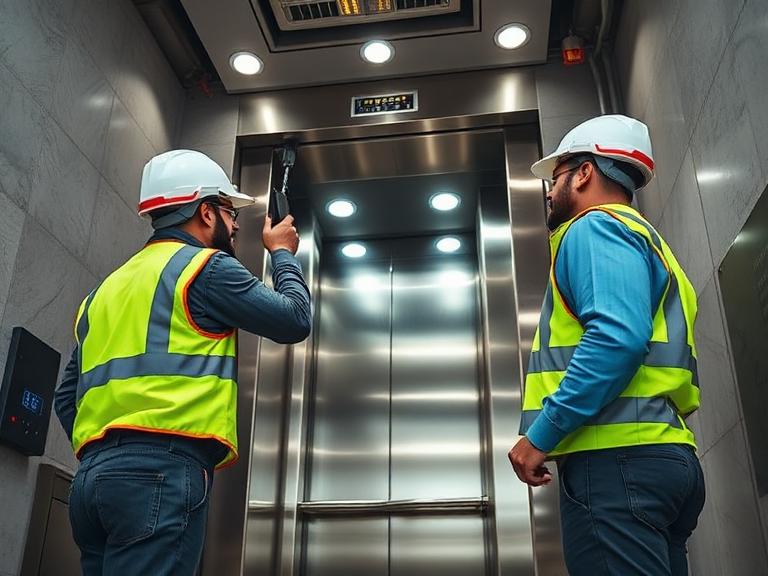
The Legal Framework & Compliance Mandates in Telangana
Building owners, Resident Welfare Associations (RWAs), and facility managers hold legal responsibility for elevator safety. Operating an elevator with an expired license or unverified safety systems carries heavy legal penalties under state statutes.
                     [ TELANGANA LIFTS & ESCALATORS ACT ]
                                       │
            ┌──────────────────────────┴──────────────────────────┐
            ▼                                                     ▼
 [ MANDATORY CEIG LICENSING ]                             [ STATUTORY SAFETY AUDITS ]
 ├── Form-A: Permission to Erect                          ├── Annual Mechanical & Load Tests
 ├── Form-B: License to Operate                           ├── Dynamic Governor & Brake Checks
 └── Periodic Renewal Certifications                      └── ARD Emergency Discharge Audits
Statutory Requirements:
- CEIG License Renewal: The Chief Electrical Inspectorate (CEIG) requires regular technical inspections before issuing or renewing a lift’s license to run.
- Insurance Compliance: Commercial property and third-party liability insurance policies require documented safety audit reports.
- Municipal Occupancy Clearances: The Greater Hyderabad Municipal Corporation (GHMC) requires valid elevator fitness certificates for commercial building operational permits.
3-Zone Safety Audit Protocols
A comprehensive lift safety audit inspects the equipment across three distinct physical operational areas:
+-------------------------------------------------------------------------+
|                  Comprehensive 3-Zone Inspection Matrix                 |
+-------------------------------------------------------------------------+
                                     │
         ┌───────────────────────────┼───────────────────────────┐
         ▼                           ▼                           ▼
[ ZONE 1: MACHINE ROOM ]      [ ZONE 2: HOISTWAY & CAR ]   [ ZONE 3: ELEVATOR PIT ]
├── Sheave & Brake Torque     ├── Rope Diameter & Lay     ├── Buffer Return Speeds
├── Controller & VFD Panel    ├── Door Light Curtains     ├── Limit Safety Switches
└── Overspeed Governor        └── Car Operating Panel     └── Moisture & Sump Pump
Zone 1: Machine Room & Power Distribution
- Brake Holding Torque Test: Testing electromagnetic brake holding power at 100% and 110% rated car load to verify zero slippage.
- Overspeed Governor Inspection: Mechanical tripping of the flyweight governor mechanism to verify instant safety wedge clamping on guide rails.
- Electrical Safety & VFD Check: Inspection of phase failure relays, insulation resistance, grounding continuity, and VVVF drive health.
- Automatic Rescue Device (ARD) Simulation: Cutting main grid supply under full load to measure battery output, leveling precision, and door opening response.
Zone 2: Shaft Way, Hoistway & Elevator Car
- Suspension Rope Integrity: Ultrasonic and caliper measurement of wire ropes to detect crown wire fractures, diameter shrinkage, and strand corrosion.
- Door Safety Mechanisms: Multi-point testing of full-height infrared light curtains, mechanical safety edges, and interlock contacts.
- Emergency Communication Systems: Verification of two-way intercom clarity, alarm bell loudness, and backup battery duration.
Zone 3: Elevator Pit & Lower Safety Systems
- Oil Buffers & Impact Dampers: Inspecting oil levels, stroke compression, return spring speeds, and plunger corrosion.
- Limit & Slack-Rope Switches: Testing final directional limit switches to prevent car over-travel into pit or overhead structures.
- Water & Moisture Management: Inspecting pit floor dry-state conditions, testing sump pumps, and isolating electrical circuits from moisture risk.
Third-Party Inspection vs. Standard AMC Maintenance
Building managers often confuse regular AMC visits with statutory safety inspections.
| Evaluation Parameter | AMC Maintenance Vendor | Independent Inspection Service |
| Primary Objective | Routine cleaning, oiling, and part adjustments | Objective safety, code, and structural evaluation |
| Audit Perspective | Self-checking own maintenance work | Unbiased third-party assessment |
| Reporting Scope | Servicing logs & maintenance billing | Legal compliance, hazard flagging, and CEIG prep |
| Load Testing Capability | Rarely performs physical weight-stack load testing | Executes certified 100% and 110% full-load tests |
| Regulatory Standing | Service provider | Independent compliance auditor |
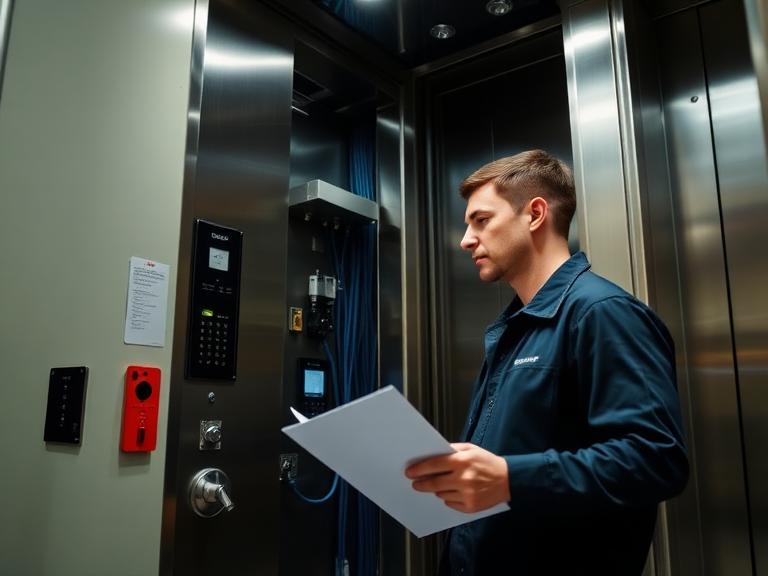
Primary Service Zones in Hyderabad
Certified technical inspection teams operate across all major commercial and residential hubs:
- Tech & IT Corridors: Hitec City, Gachibowli, Madhapur, Nanakramguda, Rai Durg, Kondapur.
- High-Rise Residential Belts: Tellapur, Miyapur, Kukatpally, Manikonda, Puppalguda, Kompally.
- Commercial & Central Districts: Banjara Hills, Jubilee Hills, Somajiguda, Begumpet, Abids, Secunderabad.
Frequently Asked Questions
1. What are Lift Inspection Services in Hyderabad?
Lift inspection services are independent technical audits that evaluate an elevator’s mechanical, electrical, and safety systems against Bureau of Indian Standards (BIS IS 14665) and local Chief Electrical Inspectorate (CEIG) regulatory mandates.
2. Is a lift safety inspection compulsory under Telangana law?
Yes. Under the Telangana Lifts, Escalators, and Passenger Conveyors Act, all residential, commercial, and industrial elevators must undergo periodic safety inspections to hold a valid operating license.
3. How often should elevators undergo safety inspections?
Elevators should undergo a full statutory safety inspection annually. Commercial towers and high-traffic IT hubs are recommended to complete quarterly internal safety audits.
4. What is tested during a full-load safety inspection?
Inspectors test the mechanical brake torque under 100% and 110% rated load capacity, verify over-speed governor activation, check car buffer impact performance, and test emergency landing mechanisms.
5. Why is an independent lift inspection necessary if we already have an AMC?
An AMC provides routine upkeep, whereas an independent safety inspection provides an unbiased third-party audit of component wear, hidden hazards, and compliance with statutory fire and electrical codes.
6. What happens if a lift fails its safety inspection?
A formal Non-Compliance Notice detailing required repairs is issued. Once the AMC vendor rectifies the flagged issues, a re-inspection is conducted to grant certification.
7. Are Automatic Rescue Devices (ARD) checked during inspections?
Yes. Inspectors cut main grid power under full load to test battery discharge, car floor leveling precision, and automatic door opening speed.
8. Do insurance companies require a lift inspection certificate in Hyderabad?
Yes. Insurance providers require a valid CEIG license and current Safety Audit Certificate before issuing or honoring third-party liability claims.
9. How long does a technical lift inspection take?
A standard inspection takes between 2 to 4 hours per elevator car, depending on building height, capacity, and drive type.
10. What physical areas of the elevator do engineers inspect?
Inspectors audit three distinct zones: the Machine Room (drive motor, controller, governor), the Hoistway & Car Top (ropes, light curtains, guide rails), and the Elevator Pit (buffers, limit switches, water control).
11. Can you assist building owners with CEIG license renewals in Telangana?
Yes. Certified inspectors assist with document preparation, technical pre-audits, application submissions through state portals, and coordination with electrical inspectors.
12. How are wire ropes evaluated for structural integrity?
Engineers measure rope diameter reduction using calipers, count broken crown wires per lay length, and check for internal rusting or tension imbalances.
13. Do home lifts in private villas require safety inspections?
Yes. Private residential lifts must meet safety norms to protect occupants and verify proper functioning of battery lowering units and door locks.
14. What is the cost of a lift inspection service in Hyderabad?
Pricing ranges between ₹3,500 to ₹7,500 per lift for residential buildings and ₹8,000 to ₹15,000 per car for commercial high-rises requiring full load testing.
15. How do I book an emergency or pre-commissioning lift inspection?
Call +91-9000000000 or fill out the online audit request form to schedule a certified inspection team within 24 to 48 hours.