
Table of Contents
24/7 Lift Rescue Service in Hyderabad | Emergency Elevator Entrapment Extraction
In a rapidly expanding metropolis like Hyderabad, vertical transportation forms the backbone of daily life. From high-rise IT hubs in HITEC City, Gachibowli, Knowledge City, and Financial District to sprawling residential communities in Kukatpally, Kondapur, Miyapur, Kompally, and LB Nagar, thousands of elevators run continuously. However, power grid fluctuations, severe monsoon thunderstorms, sudden electrical drive trips, and Automatic Rescue Device (ARD) failures can instantly convert an elevator car into a stressful enclosure holding trapped passengers.
When a lift breakdown occurs, having access to a dedicated Lift Rescue Service in Hyderabad is a vital safety requirement. Extracting trapped passengers safely demands certified technical proficiency, specialized manual release tooling, precise mechanical hand-winding knowledge, and strict adherence to Telangana Lifts & Escalators Rules.
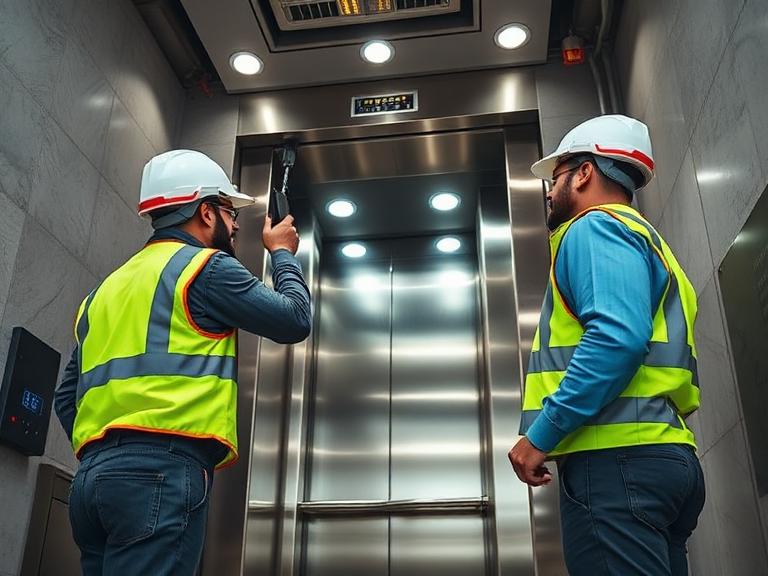
1. The Critical Anatomy of Lift Entrapments
An elevator entrapment occurs when safety sensors, power supplies, or mechanical interlocks detect an anomaly and instantly engage the electrical safety circuit. To prevent free-fall or unsafe car movement, the control system cuts power to the motor and drops the heavy mechanical brakes.
┌─────────────────────────────────────────────────────────────────────────────┐
│                       ELEVATOR ENTRAPMENT DYNAMICS                          │
├──────────────────────────────────────┬──────────────────────────────────────┤
│        COMMON CAUSES OF FAILURE      │       IMMEDIATE SYSTEM REACTION      │
├──────────────────────────────────────┼──────────────────────────────────────┤
│ • Power Grid Blackout / Brownout     │ • Main Safety Relay Cuts Power       │
│ • Exhausted / Faulty ARD Batteries   │ • Mechanical Brakes Instantly Clamp  │
│ • VFD Drive Overcurrent Trip (ERR02) │ • Door Interlock Circuit Opens       │
│ • Door Sensor Obstruction / Jamming  │ • Car Locks Dead Between Floors      │
│ • Overspeed Governor Wedge Trigger   │ • Passengers Require Manual Rescue   │
└──────────────────────────────────────┴──────────────────────────────────────┘
While safety mechanisms operate as designed to prevent physical harm, trapped occupants often experience anxiety, claustrophobia, and panic. Professional emergency rescue teams must intervene quickly to level the car and safely extract passengers.
2. Standard Emergency Passenger Extraction Protocol
Extracting trapped passengers from a suspended elevator car requires methodical execution. Uncertified personnel attempting to force door panels open risk severe accidents, including elevator shaft falls or unexpected car movements.
The following standardized step-by-step procedure is followed by certified rescue engineers in Hyderabad:
1
Establish Immediate Communication & Calm Passengers
Prerequisite: Do NOT attempt mechanical action before reassuring occupants
1.Establish Immediate Communication & Calm Passengers:Prerequisite: Do NOT attempt mechanical action before reassuring occupants.
Locate the elevator position using landing indicators or intercoms. Speak through the door or intercom to inform occupants that a certified rescue team is on-site. Instruct everyone inside to move toward the center of the car, stay calm, avoid pushing against the doors, and refrain from jumping.
2
Isolate Main 3-Phase Power Supply (Lockout / Tagout)
Safety Critical: Mandatory electric safety step
2.Isolate Main 3-Phase Power Supply (Lockout / Tagout):Safety Critical: Mandatory electric safety step.
Access the machine room or main control cabinet. Turn off the main 3-phase circuit breaker (Isolator Switch) and lock it out. This prevents the elevator from suddenly restarting if utility power returns while technicians are manually releasing brakes.
3
Verify Landing Zone Position & Cable Tension
Mechanical assessment step
3.Verify Landing Zone Position & Cable Tension:Mechanical assessment step.
Check the hoistway ropes and indicator lights to determine whether the elevator car is positioned within a floor landing zone (±0.5 meters) or suspended in a blind hoistway zone between floors.
4
Execute Manual Hand-Winding / Brake Release
Precision mechanical control step
4.Execute Manual Hand-Winding / Brake Release:Precision mechanical control step.
For geared elevators: Fit the manual hand-winding wheel onto the high-speed motor shaft. Apply controlled pressure on the manual brake release lever to open the brake pads in short pulses, allowing the counterweight imbalance to drift the car slowly toward the nearest floor. For gearless MRL elevators: Activate the battery-powered electronic brake release button on the emergency control panel to release the brake in controlled pulses until the landing zone LED illuminates.
5
Verify Leveling & Unlock Landing Doors with Drop-Key
Passenger extraction phase
5.Verify Leveling & Unlock Landing Doors with Drop-Key:Passenger extraction phase.
Once the landing indicator confirms the car is level with a floor, double-check that the brake is securely clamped. Insert the tri-lobe or double-prong emergency drop-key into the landing door keyhole, push the door mechanism, pull open the outer landing doors, and assist passengers out safely.
6
Perform System Lockout & Root-Cause Fault Diagnostic
Post-rescue safety verification
6.Perform System Lockout & Root-Cause Fault Diagnostic:Post-rescue safety verification.
Do NOT restore power or return the lift to public service immediately. Keep the lift isolated, post ‘Out of Service’ signage on all floor landings, and perform a comprehensive fault diagnostic check to identify the cause of failure.
3. Rapid Response Dispatch SLA Across Hyderabad
Time is critical during an elevator emergency. Dedicated 24/7 rescue fleets utilize strategically positioned service vehicles to ensure rapid deployment across Greater Hyderabad.
www.elevatorcare.in+ 1
Emergency Hotline Call Reception & SOS Dispatch
0 to 5 Minutes
The 24/7 emergency hotline receives the call from building security or trapped passengers. Dispatchers verify the location, building type, car condition, and number of trapped occupants, immediately alerting the nearest mobile rescue unit.
Mobile Technical Unit Navigation
5 to 20 Minutes
The equipped rescue vehicle navigates to the target destination using real-time GPS routing across major arterial routes (e.g., ORR, PVNR Expressway, Inner Ring Road).
On-Site Arrival & Building Security Liaison
20 to 35 Minutes
Technicians arrive on site, register with building management, retrieve machine room keys, and establish direct voice contact with trapped occupants.
Power Isolation, Car Leveling & Safe Extraction
35 to 45 Minutes
Engineers isolate main power, perform manual brake releases, level the car, unlock the landing door, and safely extract all passengers.
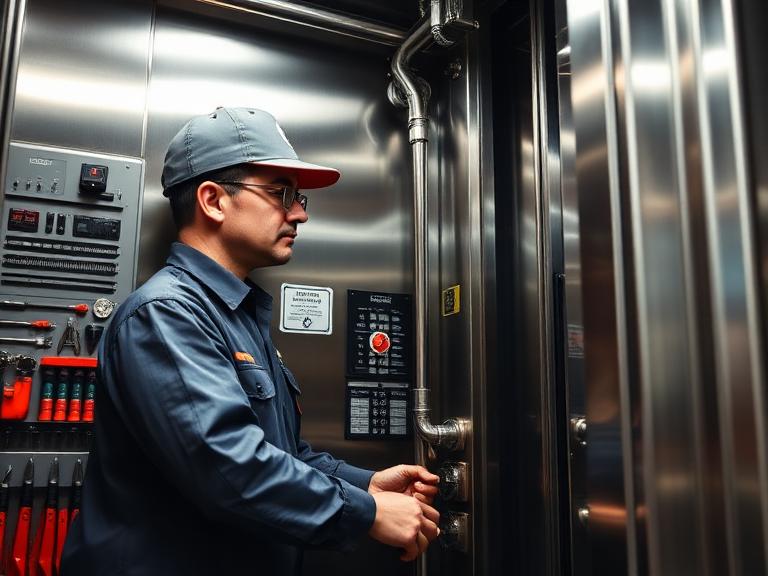
4. Automatic Rescue Devices (ARD) vs. Manual Rescue Operations
Modern elevators in Hyderabad are equipped with an Automatic Rescue Device (ARD). However, understanding the difference between automated and manual rescue operations helps explain why manual rescue services remain necessary.
┌─────────────────────────────────────────────────────────────────────────────┐
│                 AUTOMATIC RESCUE vs. MANUAL RESCUE SERVICES                 │
├───────────────────────────────┬─────────────────────────────────────────────┤
│ AUTOMATIC RESCUE DEVICE (ARD) │ MANUAL EMERGENCY RESCUE SERVICE             │
├───────────────────────────────┼─────────────────────────────────────────────┤
│ • Inbuilt electronic battery  │ • Deployed when ARD or mechanical components│
│   inverter system.          │   fail completely.            │
│ • Triggers within 10–30 secs  │ • Dispatched 24/7 across Hyderabad          │
│   during power outage.       │   (30–45 min arrival SLA).      │
│ • Moves car in lightest load  │ • Uses manual hand-winding, hydraulic jacks,│
│   direction to nearest floor.│   or electronic brake release levers.       │
│ • Ineffective if safety circuit│ • Resolves mechanical jams, snapped ropes, │
│   trips or batteries fail.   │   and safety gear wedge locks.    │
└───────────────────────────────┴─────────────────────────────────────────────┘
Key Failure Modes of ARD Systems in Hyderabad
- Battery Degradation: Sealed Lead-Acid (SMF) batteries inside ARD panels degrade rapidly under machine room temperatures exceeding 40∘C, losing charge capacity within 12–18 months.
- Primary Safety Circuit Trips: If a lift stops due to a tripped limit switch, door lock failure, or overspeed governor wedge, the ARD automatically disables itself to prevent driving a damaged car.
- Inverter & MOSFET Burnout: Voltage surges during power restoration can blow the ARD inverter card MOSFETs, rendering the automated backup system inoperative. Gosavi Electronics
5. Machine-Room-Less (MRL) vs. Geared Elevator Rescue Dynamics
With Machine-Room-Less (MRL) gearless elevators becoming standard in Hyderabad’s commercial and residential developments, rescue techniques differ significantly from traditional geared elevators:
| Feature / Dynamic | Geared Traction Elevators (Traditional Machine Room) | Machine-Room-Less (MRL) Gearless Elevators |
|---|---|---|
| Motor Location | Separate dedicated machine room on rooftop. | Inside the top of the elevator hoistway shaft. |
| Brake Release Mechanism | Heavy manual mechanical hand-lever on brake shoes. | Low-voltage battery-powered electronic brake release panel. |
| Leveling Indication | Paint markings on steel ropes aligned with motor frame. | Optoelectronic LED landing indicators on emergency control panel. |
| Car Movement Method | Manual hand-winding flywheel rotated by technician. | Controlled gravity drift via intermittent brake pulsing. |
| Safety Gear Disengagement | Manual leverage bars in overhead room. | Hydraulic jack lifting from pit or car top framework. |
6. Telangana Lifts & CEIG Regulatory Standards
Under the Telangana Lifts, Escalators, and Passenger Conveyors Act and regulations enforced by the Chief Electrical Inspectorate to Government (CEIG), elevator installation and rescue compliance must follow strict guidelines:
- Mandatory Emergency Lighting & Intercom: Every passenger lift must feature an independent battery-operated emergency light and two-way voice communication system functioning for a minimum of 4 hours during power failures.
- Annual Safety Inspection: Elevators must undergo annual safety load tests, governor trip tests, and emergency brake testing to maintain a valid operating license.
- Trained Rescue Personnel: Building owners and Resident Welfare Associations (RWAs) are required to maintain an active contract with a recognized elevator service provider offering 24/7 emergency response.
7. Emergency Readiness Checklist for Building Management & Security
Building security guards and facility managers are often the first on scene during an entrapment. Following correct actions prevents injury:
DO’s:
- DO maintain clear communication with trapped occupants and reassure them that help is on the way.
- DO immediately contact the 24/7 Lift Rescue Hotline with the exact building address, lift shaft number, and passenger count. www.elevatorcare.in
- DO switch off the main 3-phase power supply isolator in the machine room before any manual release operation is performed.
- DO keep the emergency tri-lobe door release key in an easily accessible, locked security cabinet.
DON’Ts:
- DON’T attempt to pry open elevator car or landing doors using crowbars, screwdrivers, or raw force.
- DON’T allow untrained guards or residents to perform manual hand-winding without proper certification.
- DON’T restore main electrical power while a technician is actively performing manual brake release operations.
- DON’T leave the landing door unlocked or unattended after passengers have been rescued.
8. Neighborhood Coverage Across Greater Hyderabad
Emergency lift rescue fleets cover key commercial, residential, and industrial zones across Hyderabad and Secunderabad:
ElevatorCare Hyderabad
                       HYDERABAD EMERGENCY COVERAGE HUB
                                       │
    ┌──────────────────────────────────┼──────────────────────────────────┐
    ▼                                  ▼                                  ▼
 IT & COMMERCIAL CORRIDOR        GATED RESIDENTIAL HUBS             OLD CITY & INDUSTRIAL
(HITEC City, Gachibowli,       (Kukatpally, Kondapur, Miyapur,    (Balanagar, Jeedimetla, Uppal,
 Madhapur, Financial Dist.)     Kompally, LB Nagar, Jubilee Hills) Cherlapally, Secunderabad)
 ──────────────────────────     ──────────────────────────────────  ──────────────────────────────
 • High-Speed MRL Rescues       • Multi-Block Apartment Rescues     • Heavy Goods & Freight Lifts
 • Corporate SLA Retainers      • RWA Emergency Annual Contracts    • Industrial Safety Wedge Rescues
 • Dedicated Mobile Fleet       • 24/7 Night Response Coverage      • Rapid Technician Dispatch
Frequently Asked Questions (FAQs)
Q1: What should trapped passengers do immediately when a lift stops working in Hyderabad?
Answer: Passengers trapped in a stopped lift should remain calm, press the emergency bell or yellow alarm button, use the internal two-way intercom to notify security, and dial a dedicated 24/7 lift rescue service hotline. Occupants must never attempt to force open landing doors or climb out through the ceiling hatch, as uncoordinated movement can lead to severe accidents.
www.elevatorcare.in
Q2: How fast can an emergency lift rescue team arrive in Hyderabad?
Answer: Professional emergency lift rescue providers maintain response fleets positioned across key corridors in Hyderabad. Average arrival times range between 30 and 45 minutes for major regions such as HITEC City, Gachibowli, Madhapur, Kukatpally, Secunderabad, Banjara Hills, and LB Nagar.
Jackson Lifts+ 1
Q3: Why does a lift stop between floors even when an Automatic Rescue Device (ARD) is installed?
Answer: An ARD will fail to rescue passengers if its internal Lead-Acid batteries have lost charge, if the inverter MOSFET board has suffered high-voltage surge damage, or if the elevator stopped due to a mechanical safety trip (such as an overspeed governor actuation, mechanical brake jam, or door safety switch disconnection) rather than a simple grid power cut.
Gosavi Electronics
Q4: Is oxygen deficiency a threat inside a trapped elevator car?
Answer: No. Elevator cars are not airtight units. They are constructed with mandatory upper and lower ventilation slots along the side panels, baseboards, and door headers. Fresh air circulates naturally through the hoistway shaft even when power to the internal electric fan drops.
Q5: How is a manual brake release performed on a gearless Machine-Room-Less (MRL) elevator?
Answer: On MRL elevators lacking a rooftop machine room, technicians access the emergency service panel located on the top landing door frame. Using a battery-powered brake release tool or mechanical lever, they open the motor brake in short, controlled pulses. This allows counterweight imbalance to drift the car slowly toward the floor level indicated by an optoelectronic landing LED indicator.
Q6: Can building security guards attempt to perform manual lift rescue operations?
Answer: Security personnel should only perform basic key releases if they have completed documented, certified elevator rescue training, the main 3-phase power isolator is locked off, and the car position is verified to be within the door landing zone. Untrained personnel must never attempt manual hand-winding or brake release operations.
Q7: What is the cost of emergency lift rescue service in Hyderabad?
Answer: One-time emergency rescue dispatch charges for trapped passenger extraction range between ₹1,500 and ₹4,500 depending on time of day, location, and operational complexity (such as disengaging stuck safety wedges). Annual 24/7 emergency rescue retainer contracts for gated communities and commercial complexes start between ₹18,000 and ₹35,000 per year.
Q8: What causes a lift safety gear wedge to lock the car onto the guide rails?
Answer: Safety gear wedges engage automatically when the overspeed governor senses car travel exceeding rated safety limits, if suspension cables experience mechanical slack, or if a sudden electronic drive fault triggers the governor solenoid. Releasing locked wedges requires specialized hydraulic lifting equipment operated by experienced engineers.
Q9: Are 24/7 emergency lift rescue services available during night hours and state holidays in Hyderabad?
Answer: Yes. Emergency lift rescue teams operate 24 hours a day, 365 days a year—including midnight hours, national holidays, and severe weather conditions across the entire Hyderabad and Secunderabad metropolitan area.
Jackson Lifts
Q10: What safety norms govern lift emergency rescue operations in Telangana?
Answer: All rescue operations, safety procedures, and elevator maintenance standards are governed by the Telangana Lifts, Escalators, and Passenger Conveyors Act, Bureau of Indian Standards safety guidelines (IS 14665 and IS 17900), and safety protocols enforced by the Chief Electrical Inspectorate to Government (CEIG).
Q11: How does an emergency rescue device (ERD) differ from a regular home UPS?
Answer: Regular home UPS units cannot supply the high inductive starting currents (often 300% of rated capacity) demanded by three-phase elevator induction or PMSM gearless motors. Lift-specific ARD/ERD units feature heavy-duty three-phase inverter stages, custom surge suppression circuits, and auto-floor sensing logic.
Q12: What should a facility manager do after passengers have been safely rescued?
Answer: Following a rescue, the elevator must remain isolated with main power switched off and locked out. Certified elevator engineers must conduct a thorough fault log audit, safety loop check, brake system test, and trial run before re-opening the lift for public use.
Q13: Can hydraulic lifts be manually rescued during a power outage?
Answer: Yes. Hydraulic lifts feature a manual lowering valve mounted directly on the hydraulic oil pump unit in the machine room. Opening this valve allows hydraulic fluid to return slowly to the fluid reservoir, lowering the elevator car safely to the ground floor landing via gravity.
Q14: What areas of Greater Hyderabad are covered by fast emergency lift rescue teams?
Answer: Emergency rescue fleets cover all major zones including HITEC City, Gachibowli, Madhapur, Kondapur, Kukatpally, Miyapur, Jubilee Hills, Banjara Hills, Begumpet, Secunderabad, Uppal, LB Nagar, Kompally, Shamshabad, and Jeedimetla.
ElevatorCare Hyderabad
Q15: How can gated communities prevent elevator entrapments during monsoon power cuts?
Answer: Gated societies can prevent entrapments by carrying out monthly ARD battery load testing, ensuring automatic generator transfer switches (AMF panels) switch over within 10 to 15 seconds, replacing SMF batteries every two years, and retaining a reliable 24/7 emergency service contract with certified technicians.
Conclusion: Immediate 24/7 Emergency Support Across Hyderabad
When an elevator breakdown leaves passengers trapped between floors, rapid response, certified technical expertise, and safety-first protocols make all the difference. Partnering with a professional Lift Rescue Service in Hyderabad ensures rapid 30-to-45-minute dispatch SLAs, safe manual brake release operations, thorough ARD battery servicing, and full regulatory compliance—keeping building occupants safe day and night.