
Table of Contents
Elevator Modernization Hyderabad | Expert Lift Upgrades & Safety Retrofits
Hyderabad has experienced rapid urban growth, transforming into a booming technology and commercial center. From high-density IT parks in HITEC City, Gachibowli, and Financial District to sprawling residential communities in Kukatpally, Kondapur, Miyapur, Kompally, and Jubilee Hills, vertical transportation is a core utility.
However, thousands of residential apartments, commercial complexes, healthcare facilities, and government structures across Hyderabad still rely on aging elevators installed 15 to 25 years ago. These legacy systems frequently suffer from:
- Recurrent technical breakdowns and unannounced shutdowns.
- Escalating electricity bills due to inefficient geared traction machines.
- Jerky starts, sudden stops, and inaccurate floor leveling.
- Obsolescence of electrical relay spare parts.
- Non-compliance with safety norms under the Telangana Lifts Act and Chief Electrical Inspectorate to Government (CEIG) directives.
Elevator modernization in Hyderabad offers a cost-effective, high-impact alternative to complete lift replacement. By retrofitting advanced microprocessor controllers, variable-frequency drives, gearless PMSM technology, Automatic Rescue Devices (ARD), and aesthetic cabin upgrades, building owners can achieve up to 80% of the benefits of a brand-new elevator at a fraction of the cost—all with minimal structural disruption.
1. What is Elevator Modernization?
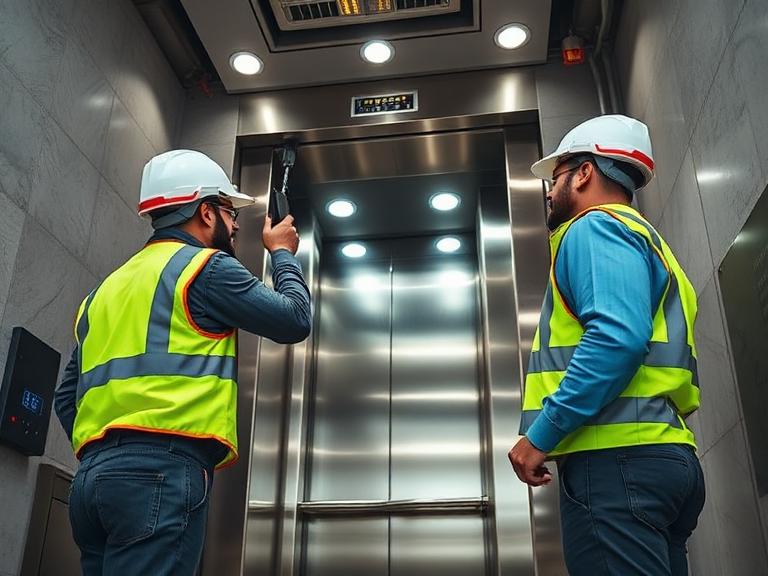
Elevator modernization (also referred to as a lift retrofit or upgrade) is the systematic overhaul of an existing elevator’s operational core while retaining its structural foundation.
┌────────────────────────────────────────────────────────────────────────┐
│                   ELEVATOR MODERNIZATION STRUCTURE                     │
├──────────────────────────────────┬─────────────────────────────────────┤
│      RETAINED COMPONENTS         │         UPGRADED COMPONENTS         │
│     (Structural / Durable)       │      (Electrical / Mechanical)      │
├──────────────────────────────────┼─────────────────────────────────────┤
│ • Elevator Hoistway & Pit        │ • Microprocessor Control Panel      │
│ • Heavy Steel Guide Rails        │ • VVVF Drive & Inverter System      │
│ • Car Frame & Counterweight      │ • PMSM Gearless Traction Machine    │
│ • Hoistway Enclosure & Shaft     │ • Automatic Rescue Device (ARD)     │
│ • Structural Floor Beams         │ • Infrared Light Curtain Sensors    │
│                                  │ • Auto-Doors & COP/LOP Touch Panels │
│                                  │ • Stainless Steel Cabin Interiors   │
└──────────────────────────────────┴─────────────────────────────────────┘
Rather than executing a destructive, months-long teardown that damages civil infrastructure, modernization retains the heavy structural assets (guide rails, counterweight frames, hoistway pits) and focuses investment on upgrading moving parts, power electronics, safety systems, and interior finishes.
Modernization vs. Full Replacement: Key Differences
| Feature / Criteria | Elevator Modernization | Full Elevator Replacement |
| Capital Outlay | 40% – 60% Lower Cost | 100% Full Project Cost |
| Project Timeline | 1 to 3 Weeks per shaft | 6 to 12+ Weeks per shaft |
| Civil Work Required | Minimal to None | Major civil demolition & construction |
| Tenant Disruption | Low (phased work schedule) | High (long-term shaft access blockage) |
| Energy Efficiency Gain | 30% – 50% reduction | Up to 50% reduction |
| Regulatory Compliance | 100% compliant with modern norms | 100% compliant with modern norms |
| Structural Impact | Preserves existing building architecture | Requires structural modifications |
2. Why Hyderabad Buildings Need Elevator Modernization Now
A. Compliance with the Telangana Lift Act & CEIG Safety Norms
The Telangana State Government enforces strict regulations under the Telangana Lifts, Escalators, and Passenger Conveyors framework. Managed through the Chief Electrical Inspectorate to Government (CEIG), all commercial and multi-dwelling residential buildings must maintain valid operational licenses.
Building owners and Residents’ Welfare Associations (RWAs) are legally responsible for lift safety. Failure to meet prescribed safety standards can lead to license cancellations, heavy fines, or immediate elevator shutdown orders. Key regulatory requirements include:
- Mandatory Automatic Rescue Devices (ARD).
- Double-safety mechanical braking systems.
- Infrared full-height light curtains for automatic doors.
- Over-speed governors and safety gear mechanisms.
- Phase prevention and overload sensor interlocks.
                     TELANGANA LIFT ACT COMPLIANCE AUDIT
                                      │
         ┌────────────────────────────┴────────────────────────────┐
         ▼                                                         ▼
   PASSING CRITERIA                                      NON-COMPLIANCE RISKS
  ──────────────────                                    ──────────────────────
  ✔ Valid CEIG License                                  ✖ Sealed Hoistways & Fines
  ✔ Integrated ARD Battery System                       ✖ RWA / Owner Legal Liability
  ✔ Infrared Light Curtains                             ✖ Insurance Claim Rejections
  ✔ Microprocessor Braking Controls                     ✖ Tenant Entrapment Hazards
B. Severe Power Fluctuations & Outage Preparedness
Hyderabad’s rapid urban expansion can lead to localized power spikes and occasional monsoon power cuts. Legacy elevators without smart recovery systems often trap occupants between floors during outages. Modernizing with advanced Automatic Rescue Devices (ARD) ensures that the elevator safely navigates to the nearest landing, unlocks its doors, and frees passengers automatically within seconds.
C. Soaring Energy Costs in Commercial & Residential Hubs
Older elevators operating on direct-on-line motors or obsolete AC-2 drives consume high amounts of peak electricity. Modernizing with VVVF (Variable Voltage Variable Frequency) drives and PMSM (Permanent Magnet Synchronous Motor) gearless machines reduces power consumption by up to 50%. For gated communities in Kukatpally or commercial towers in HITEC City, power savings often pay back the modernization investment within 3 to 5 years.
3. Key Components Upgraded During Modernization
A modular modernization package targets specific failing sub-systems, allowing custom tailoring based on building budget and engineering requirements.
                          ELEVATOR MODERNIZATION
                                     │
    ┌────────────────┬───────────────┴───────────────┬────────────────┐
    ▼                ▼                               ▼                ▼
ELECTRICAL       MECHANICAL                      SAFETY          AESTHETICS
──────────       ──────────                      ──────          ──────────
• Micro-Control  • PMSM Gearless Motor           • ARD Unit      • SS Cabins
• VVVF Drive     • Automatic Door Operators      • Light Curtain • Touch LOP/COP
• Smart Wiring   • Brake Assemblies              • Speed Governor• LED Lighting
1. Elevator Controller & VVVF Drive
- Microprocessor Control Systems: Replacing antiquated relay logic boards with 32-bit digital microprocessor controllers ensures rapid call handling, reduced wait times, self-diagnostics, and fault logging.
- Variable Voltage Variable Frequency (VVVF) Drives: Delivers step-less acceleration and deceleration curves. This eliminates jerky movements, guarantees floor leveling within $\pm 2\text{ mm}$, and reduces motor starting current spikes by up to 60%.
2. Gearless Traction Machine Conversion
- Transitioning from traditional oil-filled geared traction machines to PMSM (Permanent Magnet Synchronous Motor) gearless machines offers major upgrades:
- Eliminates gear oil changes and potential shaft leakage.
- Operates at reduced noise levels below $50\text{ dB}$.
- Lowers motor power consumption substantially.
- Takes up a smaller footprint in machine rooms or machine-room-less (MRL) configurations.
3. Automatic Door Mechanism & Infrared Safety Curtains
- Replacing noisy mechanical door operators with modern VVVF-driven door motors ensures quiet, reliable door opening and closing.
- Infrared Light Curtains: Old mechanical safety edges (which require physical contact with a person to retract) are replaced with multi-beam infrared light arrays forming an invisible safety web across the entrance. If any beam is broken, the doors reverse immediately.
4. Automatic Rescue Device (ARD) & Emergency Systems
- Retrospectively installing smart ARD systems powered by maintenance-free gel/lithium batteries.
- Integrated emergency alarms, LED car lighting, and two-way intercom connectivity linked directly to security control desks.
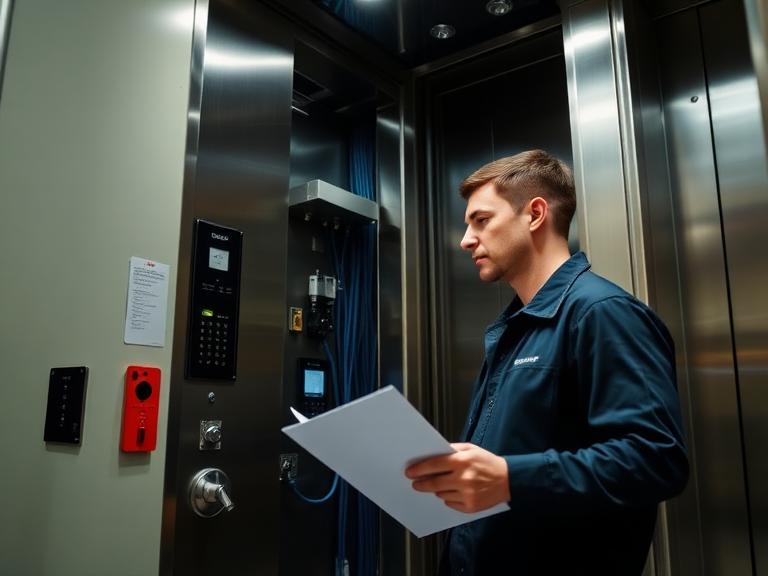
5. Cabin Interior Refurbishment & Operating Panels
- Modern interior upgrades transform the user experience:
- High-grade 304 Stainless Steel (Hairline/Mirror/Etched Gold) wall paneling.
- Energy-efficient LED ambient ceiling lighting panels.
- Modern, slip-resistant PVC granite or composite floor tile finishes.
- Digital or glass-touch Car Operating Panels (COP) and Landing Operating Panels (LOP) equipped with crisp TFT/LCD direction screens.
4. Operational & Financial Benefits of Modernization
                          MODERNIZATION VALUE PROPOSITION
                                         │
        ┌────────────────────────────────┼────────────────────────────────┐
        ▼                                ▼                                ▼
  30-50% POWER SAVINGS            80% FEWER BREAKDOWNS             100% REGULATORY COMPLIANCE
  ────────────────────            ────────────────────             ──────────────────────────
  VVVF drives + gearless          Microprocessor self-diagnostics  Meets Telangana Lift Act
  motors lower electricity        eliminate frequent service       and CEIG safety inspection
  costs drastically.         calls.               standards.
- Drastic Reduction in Operational Costs: By removing outdated, energy-intensive induction motors, properties see an immediate drop in monthly power expenses.
- Minimal Maintenance Downtime: New digital microcontrollers continuously monitor operational parameters, resulting in far fewer unexpected breakdowns.
- Smooth & Silent Ride Comfort: Eliminates vibrations, sudden jerks, screeching brakes, and dangerous floor misleveling.
- Enhanced Real Estate Asset Valuation: A modernized lift with sleek stainless steel interiors, digital touch displays, and smooth performance significantly improves visitor perception and rental yield for commercial and residential properties.
- Extended Operational Lifespan: A comprehensive modernization extends the functional service life of an existing elevator by 15 to 20 additional years at a controlled cost.
5. Step-by-Step Modernization Execution Process
Modernization follows a disciplined, engineering-led process to ensure safety, regulatory compliance, and minimal impact on building occupants.
┌─────────────────────────────────────────────────────────────────────────┐
│                     MODERNIZATION WORKFLOW TIMELINE                     │
├─────────────────────────────────────────────────────────────────────────┤
│ STEP 1: Comprehensive Site Safety & Structural Audit (Days 1–2)         │
│ STEP 2: Custom Engineering Design & Component Sourcing (Days 3–10)      │
│ STEP 3: Phased Dismantling of Mechanical / Electrical Units (Days 11–13)│
│ STEP 4: Installation of Microprocessor, Drive & PMSM Motor (Days 14–18) │
│ STEP 5: Cabin Interior Refurbishment & Door Automation (Days 19–21)     │
│ STEP 6: Rigorous Load Testing, Tuning & CEIG Certification (Days 22–24) │
└─────────────────────────────────────────────────────────────────────────┘
Step 1: Comprehensive Site Safety & Structural Audit
Qualified elevator engineers conduct a complete physical and technical assessment. They evaluate shaft plumbness, guide rail wear, motor gear conditions, pit clearance, machine room ventilation, and power stability.
Step 2: Custom Engineering Blueprint & Component Selection
Based on traffic density, building height, and budget, a custom kit is assembled. Component specs are chosen to align with IS 14665 and Telangana Lift Act guidelines.
Step 3: Phased Decommissioning
For multi-elevator buildings, one shaft is isolated while others maintain normal service. Technicians carefully remove legacy control panels, old wiring, worn hoist motors, and outdated door operators.
Step 4: Installation & Precision Retrofitting
- New gearless PMSM machines or upgraded geared motors are aligned on the machine room bedplate.
- Microprocessor control panels and VVVF drives are mounted and wired using flame-retardant cabling.
- ARD units and emergency battery banks are connected into the safety circuit.
Step 5: Cabin & Landing Operating System Integration
Automatic door operators, light curtains, and brand-new stainless steel paneling are fitted. Landing operating panels (LOP) on every floor are converted to sleek digital displays.
Step 6: Testing, Calibration & CEIG Handover
Engineers conduct safety audits, including:
- Full load and static brake tests.
- Overspeed tripping and safety gear activation checks.
- ARD power failure simulations.
- Millimeter-level floor levelling calibration.Upon successful testing, technical documentation is compiled for government licensing and handover.
6. Cost Analysis & ROI for Hyderabad Properties
Modernization pricing varies based on building height, capacity, speed, and selected upgrade scope.
                     MODERNIZATION COST DISTRIBUTION
    ┌──────────────────────────────────────────────────────────────┐
    │  Control Panel & VVVF Drive            [30% - 35%]           │
    │  PMSM Gearless Machine                 [25% - 30%]           │
    │  Door Automation & Light Curtains      [15% - 20%]           │
    │  Cabin Refurbishment & COP/LOP         [15% - 20%]           │
    │  ARD & Safety Retrofitted Components   [10% - 15%]           │
    └──────────────────────────────────────────────────────────────┘
Estimated Modernization Cost Matrix in Hyderabad
| Building Category | Typical Floors / Stops | Typical Scope of Modernization | Estimated Budget (INR)* |
| Low-Rise Residential | G + 3 to G + 5 Stops | Controller replacement, VVVF drive, ARD retrofitting, basic COP/LOP touch-up | ₹2,50,000 – ₹4,50,000 |
| Mid-Rise Apartment / RWA | G + 6 to G + 10 Stops | Full electrical overhaul, VVVF drive, door automation, cabin interior update, ARD | ₹4,50,000 – ₹7,50,000 |
| High-Rise Commercial / IT Park | 10 to 20+ Stops | PMSM Gearless conversion, high-speed microprocessor controller, full SS cabin, LCD COP | ₹7,50,000 – ₹14,00,000+ |
*Note: Actual project estimates depend on site inspections, elevator brand, capacity (kg/persons), speed (m/s), and custom architectural requirements.
Return on Investment (ROI) Breakdown
- Direct Electricity Savings: $30\% – 50\%$ lower power bills yield annual savings of ₹45,000 to ₹1,20,000+ per unit in high-use buildings.
- Reduced Maintenance Expenses: Cuts emergency call-out costs and expensive repair bills by up to $70\%$.
- Asset Appreciation: Upgraded common amenities support higher property values and rental rates across key Hyderabad micro-markets like Madhapur, Gachibowli, and Jubilee Hills.
7. Sector-Specific Solutions Across Hyderabad Micro-Markets
                      HYDERABAD SECTOR-SPECIFIC MODERNIZATION
                                         │
        ┌────────────────────────────────┼────────────────────────────────┐
        ▼                                ▼                                ▼
 IT PARKS & COMMERCIAL            GATED RESIDENTIAL               HOSPITALS & HEALTHCARE
(HITEC City / Financial Dist.)  (Kukatpally / Kondapur / Miyapur) (Banjara Hills / Secunderabad)
 ─────────────────────────────   ────────────────────────────────  ───────────────────────────────
 • High-Speed Microcontrollers   • ARD Power Outage Protection     • Smooth Stretcher Leveling
 • Smart Traffic Dispatching     • Child/Elderly Door Safety       • Hygienic Antimicrobial SS
 • Glass / Touchscreen COP/LOP   • Low Power Idle Modes            • Emergency Priority Call
1. IT Hubs & Commercial Towers (HITEC City, Gachibowli, Financial District, Madhapur)
- Key Challenges: High traffic density during peak office hours, long wait times, high energy consumption.
- Modernization Strategy: Advanced microprocessor controllers featuring collective-selective call logic, high-speed gearless machines, energy-regenerative drives, and scratch-resistant stainless steel cabin paneling.
2. Residential Apartments & Gated Communities (Kukatpally, Kondapur, Miyapur, Kompally, Bachupally)
- Key Challenges: Frequent breakdowns, noisy operation, power outage entrapments, aging elevator doors.
- Modernization Strategy: Integrated ARD backup units, ultra-smooth VVVF drives, silent automatic door operators, full-height infrared light curtains, and durable textured stainless steel interiors.
3. Commercial Complexes & Hospitals (Banjara Hills, Jubilee Hills, Begumpet, Secunderabad)
- Key Challenges: Need for precise floor leveling for stretchers/wheelchairs, high hygiene standards, and zero tolerance for unexpected downtime.
- Modernization Strategy: Millimeter-accurate leveling VVVF controllers, anti-microbial stainless steel surfaces, hands-free sensor buttons, and priority emergency override switching systems.
8. Selecting the Right Modernization Partner in Hyderabad
When evaluating elevator modernization contractors in Telangana, ensure they meet these core qualifications:
- CEIG Government Authorization: Valid electrical licenses and proven experience navigating Telangana Lift Inspectorate approvals.
- Multi-Brand Technical Expertise: Capability to modernize equipment across major OEMs (Otis, Schindler, Kone, Thyssenkrupp/TK Elevator, Johnson, Mitsubishi, local brands).
- Open-Source Controller Assurance: Preference for non-proprietary control systems that do not lock property owners into overpriced single-vendor maintenance contracts.
- Comprehensive Warranty & AMC Support: Minimum 12-to-24 month warranty on newly installed mechanical and electrical parts backed by 24/7 emergency breakdown response teams in Hyderabad.
Frequently Asked Questions (FAQs)
Q1: What is elevator modernization?
Answer: Elevator modernization is the process of upgrading the critical mechanical, electrical, electronic, and aesthetic components of an existing elevator. Rather than replacing the entire elevator shaft and guide structure, key assemblies such as the controller, traction machine, drive, safety gears, doors, and cabin interiors are retrofitted with modern technology. This enhances passenger safety, travel speed, energy efficiency, and operational reliability while bringing the system into compliance with current standards.
Q2: How much does elevator modernization cost in Hyderabad?
Answer: The cost of elevator modernization in Hyderabad ranges from ₹2,50,000 to ₹12,00,000+ per elevator, depending on the scope of work. A partial modernization (upgrading the controller, drive, and ARD) for a low-rise residential building typically costs between ₹2.5 Lakhs and ₹4.5 Lakhs. A comprehensive modernization (including a gearless PMSM motor conversion, full door automation, custom stainless steel cabin refurbishment, and LCD operating panels) for mid-to-high-rise commercial or residential towers ranges from ₹5 Lakhs to ₹12+ Lakhs per unit.
Q3: How long does an elevator modernization project take?
Answer: A standard elevator modernization project takes between 1 to 3 weeks per shaft on-site. Minor component upgrades (such as installing a new microprocessor controller panel or ARD) can be completed in 3 to 5 days, whereas a full mechanical, electrical, and cabin overhaul generally takes 2 to 3 weeks.
Q4: How do I know if my lift in Hyderabad needs modernization?
Answer: Your elevator likely requires modernization if you experience any of the following signs:
- Frequent breakdowns and service call-outs.
- Jerky movement, severe vibration, or noisy operation.
- Misleveling at floor stops, creating tripping hazards.
- High or rising electricity bills from legacy motors.
- Obsolete spare parts that are hard to source or expensive.
- Passenger entrapment during power fluctuations.
- Non-compliance with Telangana Lift Act safety standards.
Q5: Is elevator modernization mandatory under the Telangana Lift Act?
Answer: While full replacement is not strictly mandatory, maintaining compliance with safety codes enforced by the Telangana Lifts, Escalators, and Passenger Conveyors regulations and the Chief Electrical Inspectorate to Government (CEIG) is legally required. Older lifts lacking essential safety features—such as Automatic Rescue Devices (ARD), infrared full-height door sensors, double safety brakes, and emergency alarms—will fail safety inspections and must be modernized/retrofitted to maintain an operational license.
Q6: What is the difference between elevator modernization and complete elevator replacement?
Answer: Complete elevator replacement requires tearing out all components down to the raw shaft—including guide rails, counterweight frames, and pit buffers—which involves extensive civil construction, higher expenses, and long building downtime. Modernization retains heavy structural assets (rails, frames, hoistway structural elements) while replacing operational internals (controller, motor, drive, doors, cabin aesthetics). This delivers updated performance at 40% to 60% lower cost and in a fraction of the time.
Q7: Can elevator modernization lower my building’s electricity bills?
Answer: Yes. Upgrading from legacy single-speed or geared traction motors to a PMSM gearless machine paired with a Variable Voltage Variable Frequency (VVVF) drive reduces energy consumption by up to 30% to 50%. Furthermore, retrofitting smart standby lighting and LED cabin fixtures further lowers overall power costs.
Q8: Will building occupants still have lift access during the modernization process?
Answer: In multi-elevator buildings, modernizations are executed sequentially—one elevator shaft is modernized while the remaining lifts continue operating normally. In single-elevator residential buildings, work schedules are carefully planned to minimize inconvenience to residents.
Q9: What safety features are added during a modernization project?
Answer: Modernization retrofits essential safety technology into older systems, including:
- Automatic Rescue Device (ARD) for automatic power failure evacuation.
- Infrared Full-Height Light Curtains to prevent door impacts.
- Over-Speed Governor & Emergency Brakes to prevent runaway movement.
- Overload Detection Interlocks that prevent operation when weight capacity is exceeded.
- Emergency Intercom & LED Lighting Systems connected to backup power supply.
Q10: What is an Automatic Rescue Device (ARD) and why is it essential in Hyderabad?
Answer: An ARD is a battery-backed safety system that automatically monitors main power supply. In the event of a power outage or phase failure, the ARD engages, takes control of the elevator, moves it smoothly to the nearest landing floor, and opens the doors so passengers can step out safely. Given sudden power fluctuations during monsoon seasons or grid shifts in Hyderabad, an ARD is crucial to eliminate entrapment risks.
Q11: How often should an elevator be modernized?
Answer: The operational lifespan of an elevator’s core electronic and electro-mechanical systems is typically 15 to 20 years. However, high-traffic commercial buildings in IT hubs like HITEC City or Gachibowli may opt for partial modernizations (such as controller or drive upgrades) every 10 to 12 years to maintain optimal traffic handling and energy performance.
Q12: Can modernization correct floor misleveling issues?
Answer: Yes. Floor misleveling is usually caused by worn mechanical brake shoes or older single/two-speed motor controllers. Replacing the legacy drive with a modern microprocessor control panel and VVVF drive ensures precise, smooth stopping within $\pm 2\text{ mm}$ of the floor level every time, eliminating tripping hazards.
Q13: Which areas in Hyderabad are eligible for on-site modernization surveys?
Answer: On-site inspection and engineering surveys cover all key micro-markets across Hyderabad and Secunderabad, including:
- Western IT Corridor: HITEC City, Gachibowli, Madhapur, Kondapur, Financial District, Nanakramguda, Raya Durg, Kokapet.
- Residential & Commercial Hubs: Kukatpally, Miyapur, Bachupally, Kompally, Nizampet, Chanda Nagar, Pragathi Nagar.
- Central & Premium Localities: Jubilee Hills, Banjara Hills, Begumpet, Somajiguda, Ameerpet, Punjagutta, Himayatnagar.
- Secunderabad & Eastern Zones: Secunderabad, Uppal, LB Nagar, Malkajgiri, Sainikpuri, Nacharam, Nagole.
Q14: Does modernizing an elevator increase property value?
Answer: Yes. The elevator is often one of the first shared facilities visitors and prospective buyers or tenants experience. Modernizing noisy, slow, or unsightly lifts with smooth gearless drives, touch operating panels, and clean stainless steel cabins elevates overall building perception. This helps residential RWAs and commercial property managers command higher rental yields and property valuations.
Q15: What warranties and maintenance options are available after modernization?
Answer: Modernization projects typically include a 12-to-24 month warranty on newly installed parts (such as PMSM motors, VVVF drives, controllers, and door operators). Following the warranty period, service providers offer customized Annual Maintenance Contracts (AMC)—ranging from Ordinary AMC to Comprehensive AMC—to maintain reliable performance and ensure ongoing compliance with Telangana Lift Act standards.
Conclusion: Upgrade Your Elevator Performance Today
Continuing to operate an aging, inefficient, or breakdown-prone elevator leads to high maintenance costs, unsatisfied occupants, and legal non-compliance under state regulations. Elevator modernization in Hyderabad delivers a cost-effective path to modernizing your building’s vertical transportation—providing enhanced passenger safety, quiet operation, major energy savings, and modern aesthetics while preserving your core building structure.