
Table of Contents
Professional Lift Repair Hyderabad: 2026 Emergency & Technical Guide
In the bustling urban sprawl of Hyderabad—extending from the high-density IT high-rises of HITEC City and Gachibowli to the classic commercial centers of Secunderabad, Abids, and Begumpet—elevators have become essential vertical transit lines. A malfunctioning lift is more than a minor inconvenience; it stops foot traffic, affects business operations, compromises accessibility for senior citizens, and presents serious safety risks.
When a lift system fails, relying on local handyman solutions or uncertified mechanics can compromise system integrity and violate safety codes. Resolving complex electromechanical faults requires professional lift repair in Hyderabad.
Modern elevators feature complex safety loops, variable voltage variable frequency (VVVF) microprocessors, and precise mechanical alignments. Returning a downed system to service requires methodical diagnostic procedures, high-quality spare parts, and strict adherence to regional engineering codes. This comprehensive guide details common elevator failure points, diagnostic methodologies, cost realities, and legal compliance structures across Telangana.
2. Advanced Electromechanical Diagnostics: Root Cause Analysis
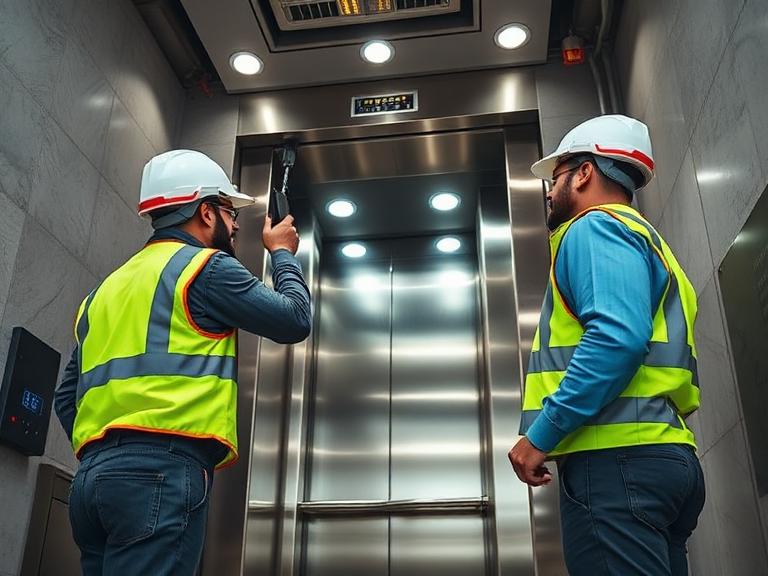
An elevator is a complex network of safety systems, electronic controllers, and structural elements. Professional technicians treat the elevator as an integrated system, analyzing faults by tracing issues back through three core functional areas:
A. Safety Circuit Loop Failures
The safety circuit is a continuous series electrical loop that links all mechanical and structural safety switches. If any switch in this loop opens, the central controller instantly cuts power to the main traction motor and applies the mechanical brakes.
- Landing Door Interlock Malfunctions: Landing doors feature mechanical locks paired with electrical contacts. Dirt, dust from nearby construction, or structural settling can misalign these contacts. If the controller doesn’t confirm the door is closed, the lift will not move.
- Car Gate Switch Wear: The inner cabin door switch handles high cycle fatigue. Worn springs or loose wiring connections can cause intermittent circuit breaks, trapping the lift between floors.
- Pit Safety & Limit Switch Trips: Water leaking into the elevator pit or minor cable stretching can trip the lower limit switch, completely locking down the system until it is manually reset.
B. Controller and Drive Electronics (PCB & VVVF)
The main control panel serves as the brain of the elevator, managing positioning signals, load metrics, and motor performance.
- VVVF Drive Faults: The Variable Voltage Variable Frequency drive ensures smooth acceleration and deceleration. Voltage fluctuations from the main power grid can cause the inverter modules to overheat, leading to tracking errors or sudden shutdowns.
- Microprocessor Component Wear: High ambient summer temperatures in Hyderabad can cause control panel enclosures to heat up. Without proper ventilation, solid-state capacitors and logic microchips on the PCB can fail, resulting in lost programming or random error loops.
- Positioning System Calibration: Modern elevators use optical sensors or magnetic switches along the guide rails to track exact floor leveling. Dust accumulation or physical shifts can cause the lift to mislevel, creating a dangerous tripping hazard at landings.
C. Mechanical and Hoisting Assemblies
Mechanical components experience continuous physical stress and require careful monitoring to prevent major failures.
- Traction Sheave Grooving: Over time, steel suspension ropes wear deep, uneven grooves into the main drive sheave. This reduces friction, causes rope slippage, and accelerates wear across the entire hoisting system.
- Guide Shoe & Roller Degradation: Sliding guide shoes require constant lubrication. If the automatic oilers run dry, the shoes rub directly against the steel guide rails, causing a rough ride and drawing more electrical power.
- Brake Caliper Miscalibration: Electro-mechanical brakes must hold the car securely at full load. Worn brake linings or weak actuator coils can cause the elevator to drift past its stop point, triggering emergency safety shutdowns.
3. Hardware Tiers & Repair Cost Metrics for Hyderabad
| Diagnostic & Operational Category | Typical Failure Symptoms | Technical Remedy & Action | Average Cost Range (INR) |
| Minor Electronic / Sensor Realignment | Door won’t close, call button fails to light up, intermittent leveling errors. | Replacement of door photo-electric sensors, realignment of landing limits, switch swap. | ₹1,500 – ₹4,500 |
| Mechanical Door Operator Overhaul | Loud scraping sounds during door travel, door jams halfway, safety reverse fails. | Replacement of drive belts, adjustment of linkages, roller bearing replacement, track cleaning. | ₹5,500 – ₹12,000 |
| Automatic Rescue Device (ARD) Repair | Lift shuts down completely during a power cut instead of traveling safely to the nearest floor. | De-sulfation or replacement of internal lead-acid battery banks, charger PCB repair, relay replacement. | ₹8,000 – ₹22,000 |
| Traction Motor Rewinding & Bearing Swap | Excessive motor heat, loud humming noises, high vibration, tripping main household fuses. | Extracting the motor assembly, rewinding coils, replacing deep-groove ball bearings, insulation testing. | ₹25,000 – ₹65,000 |
| Logic Controller Board (PCB) Replacement | Elevator ignores inputs, display screens blanks out, erratic movement profiles. | Installation of a new multi-brand microcontroller unit, reprogramming floor maps, interface calibration. | ₹35,000 – ₹90,000 |
| Complete Suspension Rope Replacement | Visible wire breaks, flattened wire crowns, rust on ropes, unequal rope tension. | Splicing and installing new high-tensile steel core elevator wire ropes, adjusting tensions. | ₹40,000 – ₹1,20,000+ |
4. Emergency Troubleshooting Protocol: Resolving a Stuck Car
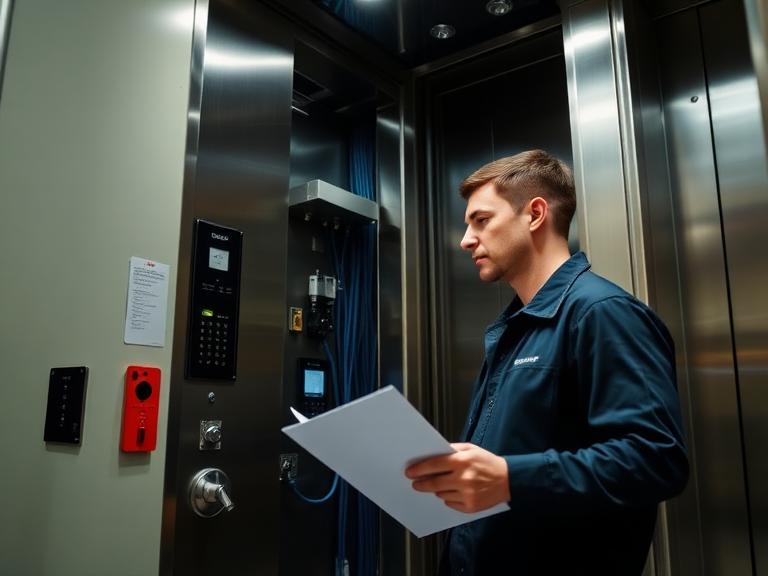
When an elevator stops between floors with passengers inside, the building management must follow an established emergency protocol. Quick, coordinated action helps ensure passenger safety and prevents damage to the equipment.
1. Establish Voice Communication
Use the cabin’s intercom system or call out through the shaft doors to talk to the stranded passengers. Reassure them that the car is structurally secure, that ventilation systems are operating, and that technicians have been dispatched. Instruct them to stay clear of the doors and remain calm.
2. Verify Primary Power and ARD Status
Check the building’s main electrical panel room to see if a utility power failure or tripped breaker caused the shutdown. If the building has lost power, check why the Automatic Rescue Device (ARD) did not automatically bring the car to the nearest landing floor.
3. Coordinate Professional Extraction
If the car cannot move under its own power, contact a certified local elevator repair service immediately. While waiting for the technician, building personnel should check the elevator’s current position through the shaft windows or indicator panels.
Safety Warning: Only licensed elevator mechanics or trained emergency responders should attempt manual brake releases or use door override keys. Uncertified rescue attempts can cause the car to drop suddenly, risking fatal accidents.
5. Regulatory Compliance & High Court Directives in Telangana
Elevator maintenance and repair are subject to evolving legal standards across India. Building owners and associations must stay updated on current local safety regulations.
The Legislative Landscape in Telangana
Historically, elevator installations across Hyderabad were managed under generic municipal building rules and the Indian Electricity Act. While neighboring states implemented dedicated Lift Acts, Telangana relied on a draft framework first created in 2015.
The regulatory environment shifted significantly following formal scrutiny by the Telangana High Court. The judiciary directed the state government to finalize comprehensive safety frameworks to protect the public.
These directives require building owners, Resident Welfare Associations (RWAs), and maintenance providers to assume greater legal accountability. Lifts must meet the strict standards of Bureau of Indian Standards (BIS) code IS 14665.
Using uncertified freelance mechanics or ignoring broken safety components can lead to strict penalties, including the suspension of operational clearances, heavy fines, and civil liability if equipment failure occurs.
6. The Danger of Delaying Repairs: The Compounding Wear Cycle
Postponing minor elevator repairs to save money usually results in accelerated wear on connected components, turning a simple fix into a major structural overhaul.
Minor Issues Scale into System Failures:
- Neglecting Worn Guide Shoes: Allowing worn guide shoes to scrape along the guide rails damages the polished steel surfaces. This forces the motor to work harder, degrading the insulation on the motor windings and shortening the life of the traction drive.
- Ignoring Loose Rope Tension: When suspension ropes don’t have equal tension, one or two cables carry the majority of the load. This causes uneven wear on the sheave grooves, requiring an expensive replacement of both the sheave and the entire set of cables.
- Delaying Door Track Repairs: Ignoring small dirt accumulations or minor misalignments in the door tracks puts extra strain on the door operator motor. Over time, this will burn out the motor’s drive electronics and armatures.
7. Operational Checklist: Vetting a Professional Repair Agency
Before hiring a company to repair your lift, building management should verify the team’s technical qualifications and operational capacity. Use this quick checklist to vet potential providers:
- Inspectorate Licensing: Does the firm hold a valid elevator engineering and maintenance license issued by the Telangana Electrical Inspectorate?
- Insurance Coverage: Can the provider show proof of active third-party liability insurance to protect your building and residents during major repair operations?
- Component Sourcing: Does the agency guarantee the use of original, OEM-certified spare parts, or do they rely on unbranded generic components?
- Diagnostic Gear: Do the technicians use professional diagnostic tools, such as digital tachometers, fluke multi-meters, and oscilloscope drive adjusters?
- Response Guarantees: Does the firm offer clear, written service level agreements (SLAs) specifying their turnaround times for emergency breakdown calls?
8. Procedural Guide to Elevator Rehabilitation
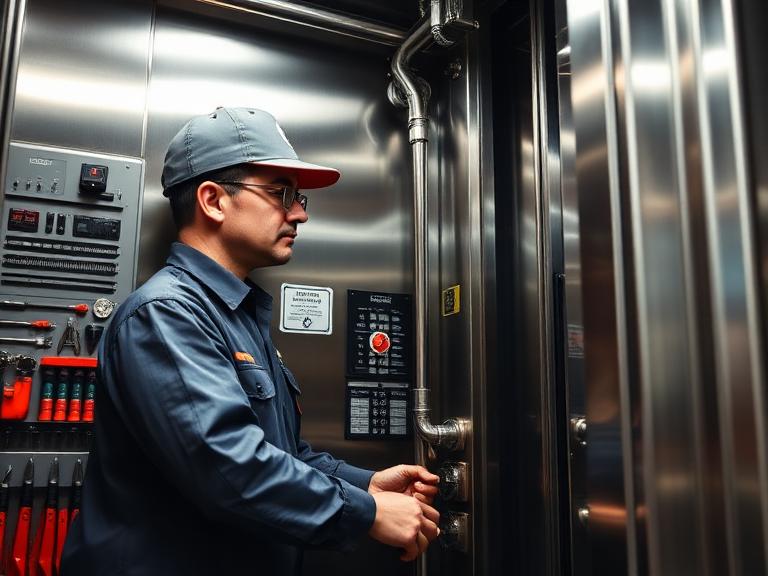
1.Lockout-Tagout (LOTO) & Site Safety Setup:Phase 1.
Isolate the primary circuit breaker in the machine room and apply a physical padlock to prevent accidental activation. Place bright warning barriers at every landing gate to alert residents that maintenance is underway.
2.Diagnostic Scanner Analysis:Phase 2.
Connect an electronic service tool to the main motherboard terminal. Read the stored fault log codes, analyze recent voltage fluctuations on the drive lines, and map out the exact circuit path causing the system shutdown.
3.Component Extraction & Replacement:Phase 3.
Remove the failed component (such as a worn door interlock mechanism or an overheated VVVF inverter capacitor module). Install the new, certified replacement part and torque all mounting hardware to factory specifications.
4.Insulation & Safety Loop Testing:Phase 4.
Use a insulation tester to verify the electrical health of the wiring. Manually test every switch in the safety loop to ensure the system halts immediately if any contact is interrupted.
5.No-Load & Full-Load Test Runs:Phase 5.
Restore primary power to the system. Run the elevator cabin through several complete no-load cycles to check leveling accuracy, then perform a full-capacity load test to verify brake performance.
6.Remove LOTO & Document the Repair:Phase 6.
Clean the door tracks, clear any tools from the lift pit, and remove the warning barriers at the landings. Update the building’s maintenance log with the repair details, part serial numbers, and technician signatures.
9. Conclusion: Protecting the Integrity of Your Building’s Mobility
Keeping an elevator running smoothly requires proactive, high-quality care rather than waiting for major mechanical failures. Investing in professional lift repair in Hyderabad protects your property value, keeps your building compliant with local regulations, and ensures the daily safety of every passenger.
Working with licensed technicians, using original parts, and addressing small mechanical issues early helps prevent unexpected shutdowns and builds a reliable vertical transit system for your property.