
Table of Contents
EV Charging Station Installation Hyderabad: The Complete Guide
The shift toward electric mobility is rapidly changing the urban landscape of Hyderabad. Driven by the proactive policies of the Telangana State Renewable Energy Development Corporation (TGREDCO) and favorable tariff structures regulated by the Southern Power Distribution Company of Telangana (TSSPDCL), Hyderabad has emerged as a key hub for EV adoption.
Whether you are an individual EV owner looking to set up a private charger in Gachibowli, a residential welfare association (RWA) in Kukatpally upgrading community parking, or a commercial property owner in Madhapur setting up a high-revenue public charging hub, planning is essential.
This comprehensive guide covers everything you need to know about EV charging station installation Hyderabad, including technical standards, permissions, costs, electrical safety, and the latest government regulations.
1. Understanding EV Charging Technology
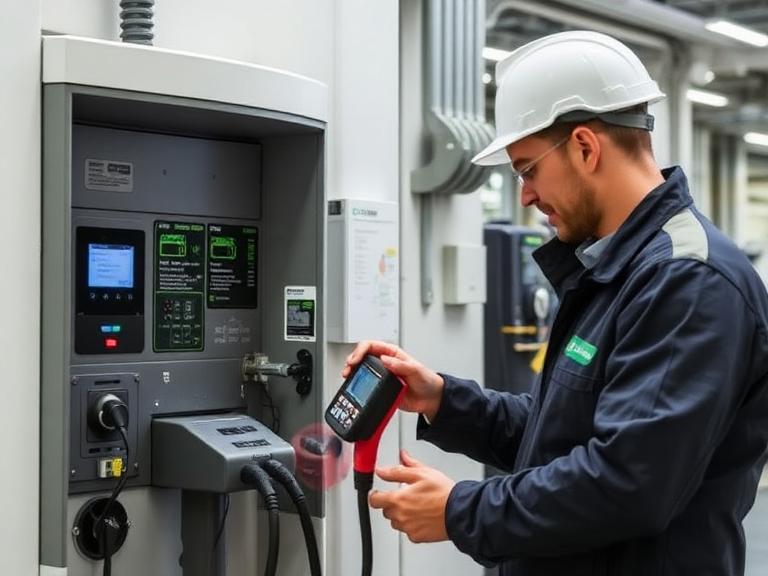
To make an informed investment, you must first understand how EV charging works and the systems that power it. Electric Vehicle Service Equipment (EVSE) acts as the bridge, delivering grid power safely to your car.
There are two primary charging pathways:
- AC Charging: The charger sends Alternating Current (AC) to the vehicle. The car’s internal On-Board Charger (OBC) then converts it to Direct Current (DC) to store in the battery pack. AC chargers are slower but more affordable, making them ideal for homes, apartments, and workplaces.
- DC Charging: The conversion from AC to DC happens inside the charging station itself, allowing power to flow directly to the battery pack. This bypasses the OBC’s limitations and enables high-power, rapid charging, which is perfect for commercial highway hubs and public stations.
Classification of EV Chargers (As per DHI/MoP & TGREDCO Guidelines)
EV chargers are categorized by their power delivery and connector types under official guidelines:
| Charger Category | Charger Power & Connectors | Rated Voltage | Typical Use Case in Hyderabad |
| Slow Charging | Bharat AC-001 (10 kW total; 3 x 3.3 kW guns) | 230 V (Single Phase) | Employee parking, residential complexes, and villas. |
| Moderate Charging | Bharat DC-001 (15 kW) | 72 V to 200 V | Commercial commercial complexes, fleet depots, and small retail spaces. |
| Fast Charging (AC) | Type-2 AC (Min 22 kW) | 380 V to 480 V (Three Phase) | Premium office spaces, hotels, and shopping malls. |
| Fast Charging (DC) | CCS2 / CHAdeMO (50 kW to 122 kW+) | 200 V to 1000 V | Public charging plazas, transit hubs, and NH-65 / NH-44 highway stations. |
2. Setting Up an EV Charging Station in Hyderabad: Step-by-Step
Installing an EV charger is an involved electrical project. Following a structured installation process ensures safety, compliance, and long-term reliability.
1.Site Assessment & Feasibility:Step 1: Planning & Scope.
Assess the parking area to confirm adequate clearance, ventilation, and flood protection. Determine the physical distance to the main electrical distribution board (DB) to estimate cabling costs.
2.Load Calculation & Grid Feasibility:Step 2: Electrical Engineering.
Calculate the cumulative load of your planned chargers. For instance, installing two 7.4 kW AC chargers requires at least 15 kW of spare electrical capacity. Check if your existing consumer meter can support this or if you need an upgraded connection from TSSPDCL.
3.Applying for a Dedicated EV Connection:Step 3: Utility Approvals.
Submit an online application to TSSPDCL for a dedicated LT (Low Tension) or HT (High Tension) connection under the special EV Tariff Category. This step separates your EV charging costs from your household or commercial billing.
4.Civil & Infrastructure Works:Step 4: Ground Preparation.
Cast concrete foundations for floor-mounted bollards or mount robust backplates for wall-hung units. Install heavy-duty conduit runs (GI or thick PVC) to protect the power cables from physical damage and weather.
5.Electrical Installation & Safety Integration:Step 5: Wiring & Safety Devices.
Run premium copper or aluminum armored cables from the dedicated distribution panel to the EVSE. Install essential safety devices: a dedicated Miniature Circuit Breaker (MCB), a Residual Current Circuit Breaker (RCCB Type B), and a Surge Protection Device (SPD).
6.Earthing & Grounding:Step 6: Protective Grounding.
Create a dedicated, low-resistance earthing pit (chemical earthing is highly recommended) specifically for the EV station. Ensure the ground resistance remains below 1 Ohm to safely divert fault currents.
7.Testing, Commissioning & Integration:Step 7: Final Go-Live.
Verify the voltage levels, test the RCCB trip functions, and run a charging simulation. Connect the charger to your local Wi-Fi or cellular network to enable remote monitoring, user authentication, and billing software.
3. Regulatory Framework & Approvals in Telangana
Telangana’s regulatory framework is designed to simplify EV charging setup, with TGREDCO serving as the state nodal agency.
Do You Need a License?
As per the Ministry of Power (MoP) guidelines adopted by Telangana, no license is required to set up, own, or operate a Public Charging Station (PCS). Any individual or entity can establish a station, provided they meet the technical, safety, and performance standards set by the Central Electricity Authority (CEA).
TSSPDCL Electricity Tariff Structure
To encourage EV adoption, TSSPDCL offers a dedicated tariff slab specifically for EV charging stations. Keeping your EV load on a dedicated meter allows you to bypass the steep residential progressive slabs (which top out at ₹9.50/unit for consumption over 800 units).
The standard electricity tariff for dedicated EV connections is highly competitive:
| Connection Category | Demand Charges | Energy Charges (Base Rate) |
| LT-EV (Low Tension) | ₹100 per kVA per month | ₹6.00 per unit (kWh) |
| HT-EV (11 kV / 33 kV) | ₹100 per kVA per month | ₹6.00 per unit (kWh) |
Note: Taxes, state electricity duties, and Time-of-Day (ToD) surcharges or rebates may apply based on TSERC updates. Charging during off-peak hours (typically 10:00 PM to 6:00 AM) often qualifies for lower energy rates.
PM E-Drive Scheme & Upstream Infrastructure Subsidies (2026 Updates)
Under the PM E-Drive initiative, TGREDCO periodically invites landowners, commercial businesses, and institutions to participate in expanding the public EV network.
- 80% Upstream Subsidy: The scheme provides up to an 80% subsidy for upstream electrical infrastructure (such as transformers, cabling, and ring main units) for Category C public stations.
- Site Requirements: Eligible properties must be at least 200 square yards in size, offer 24/7 public access, and be located along high-traffic arterial roads, commercial hubs, or national highways (such as NH-44 or NH-65).
4. Cost Breakdown of EV Charging Station Installation
The cost of setting up an EV charging station in Hyderabad varies depending on the charger’s capacity, the required electrical upgrades, and the site’s civil conditions.
1. Residential Installation (7.4 kW Single AC Charger)
- Charger Cost (EVSE): ₹25,000 to ₹50,000 (depending on smart features like Wi-Fi/RFID).
- Cabling & Conduiting: ₹8,000 to ₹15,000 (using high-grade 3-core 6 sq mm copper armored cables).
- Safety Switchgear & Earthing: ₹6,000 to ₹10,000 (Chemical earthing, Type-B RCCB, 32A MCB).
- Labor & Commissioning: ₹3,000 to ₹6,000.
- Total Estimated Cost: ₹35,000 to ₹90,000 (using your existing home meter).
2. Commercial/Public Charging Hub (Dual 60 kW DC Fast Charger)
- Dual-Gun DC Charger (60 kW): ₹4,50,000 to ₹7,00,000.
- New TSSPDCL Connection & Transformer (100 kVA): ₹2,50,000 to ₹3,50,000 (required if the site lacks spare load capacity).
- Civil Works & Protection: ₹1,00,000 to ₹2,00,000 (including canopy, concrete foundations, dual dedicated earth pits, and physical wheel stoppers).
- CMS Integration & Networking: ₹50,000 to ₹1,00,000 (Central Management Software, billing integration, and CCTV setup).
- Total Estimated Cost: ₹8,50,000 to ₹13,50,000 (eligible for capital subsidies under state and national programs).
5. Vital Electrical & Civil Safety Guidelines
Because EV chargers handle high currents over extended periods, cutting corners on safety can lead to equipment failure, battery damage, or fire hazards.
Electrical Protections
Every EV installation must include a sub-distribution panel equipped with the following safety components:
- Over-Current & Short-Circuit Protection: An appropriately rated MCB or Molded Case Circuit Breaker (MCCB) must protect the incoming power line.
- Earth Leakage Protection: A Type B RCCB is essential. Standard household Type A RCCBs cannot detect the DC residual currents that can leak from an EV’s battery pack back into the AC grid.
- Surge Protection Device (SPD): Protects the charger’s sensitive microprocessors from voltage spikes caused by lightning or grid fluctuations, which are common in Hyderabad during monsoon season.
Earth Grounding Standards
Do not connect an EV charger to a standard household utility ground. You must install a dedicated chemical earthing pit using copper or hot-dip galvanized electrodes backfilled with bentonite clay or carbon compounds.
The earth resistance must be measured regularly and maintained below 1.0 Ohm to ensure safety devices trip instantly during a fault.
Civil & Environmental Considerations
- Waterproofing: Outdoor installations require a minimum weatherproof rating of IP55 (IP65 is preferred).
- Flood Prevention: In low-lying, flood-prone areas of Hyderabad, mount all chargers on elevated concrete platforms at least 300 mm to 500 mm above the highest recorded local water level.
- Physical Protection: Install heavy-duty steel bollards or concrete wheel stoppers to protect the chargers from accidental vehicle impacts.
6. Integrating EV Charging with Solar Power
With Hyderabad receiving over 300 sunny days a year and an average of 5.8+ peak sun hours daily, combining EV charging with solar power is highly effective.
Integrating a solar rooftop system helps offset the increased electricity consumption of EV charging. Under current regulations, TSSPDCL supports solar net metering.
If you generate excess solar power during the day, you can feed it back into the grid at the TSERC-approved buy-back rate of ₹2.80 per unit. This credit helps offset the cost of charging your vehicle at night, lowering your overall driving costs and reducing your reliance on fossil fuels.
7. Choosing the Right Service Provider in Hyderabad
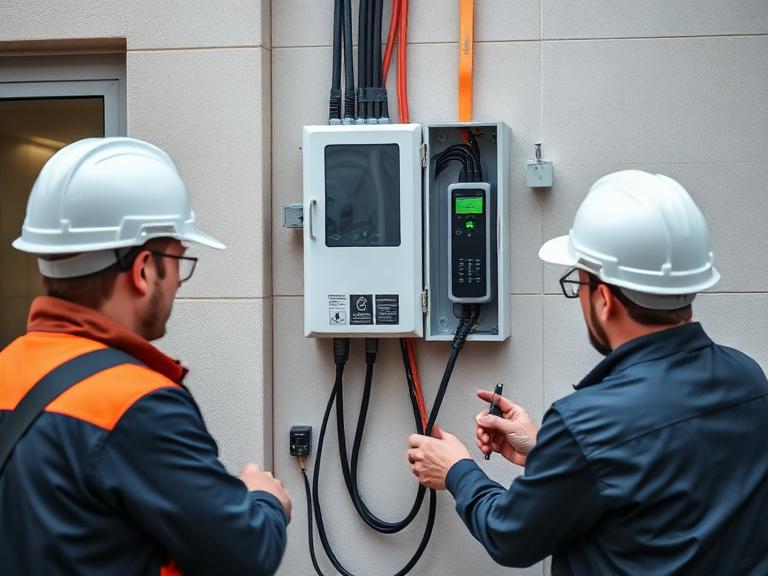
When selecting a vendor for your installation, look for providers who offer complete, end-to-end services, including:
- Site Inspection & Electrical Auditing: Professional load calculations to determine if your current infrastructure can support the new charger.
- Liaison with TSSPDCL: Managing the paperwork and approvals for load additions or dedicated EV meters.
- High-Quality Components: Sourcing OEM-authorized chargers and using armored copper cables, Type-B RCCBs, and chemical earthing systems.
- CMS & Payment Setup: Providing reliable software for commercial installations to manage payments, track sessions, and monitor charger health.
- Local Maintenance Support: Look for providers who offer solid Annual Maintenance Contracts (AMCs) and quick on-site service in Hyderabad.
8. Summary Checklist for EV Installation
Use this quick checklist to track your installation project from start to finish:
- [ ] Conducted site audit and measured cable run distance.
- [ ] Calculated total electrical load and verified spare capacity.
- [ ] Submitted application to TSSPDCL for a dedicated EV meter (if needed).
- [ ] Sourced an IP55/IP65 weatherproof charger with correct connectors (CCS2/Type-2).
- [ ] Installed dedicated chemical earthing pit (resistance verified under 1 Ohm).
- [ ] Wired the system with premium armored cables, a Type B RCCB, and a Surge Protection Device.
- [ ] Mounted the charger on an elevated concrete pad with bollards for physical protection.
- [ ] Connected the charger to local Wi-Fi/GSM and completed testing.